Summit8000Summit8000
Best of Everest – Gokyo Valley & Everest Base Camp Trek | 18 Days

Best of Everest – Gokyo Valley & Everest Base Camp Trek | 18 Days

Destination
Nepal
Duration
18 Days
Trip Difficulty
Moderate
Accommodation
4 Star hotel and Tea House
Meals
B, L, & D
Max. Elevation
5545m
Group Size
2-10
Best Time
Sept - Nov & March - May

Trip overview

The 18-day Best of Everest Trek combines two of the most popular trekking areas in the Khumbu region — the beautiful Gokyo Valley and Everest Base Camp. Instead of taking the regular Everest Base Camp route from Namche, the trail first heads towards the quieter Gokyo Valley before joining the Everest Base Camp trail later in the journey.

The trek begins with a scenic flight from Kathmandu to Lukla and continues through Phakding to Namche Bazaar. After an acclimatization day in Namche, the route takes a different direction from the usual Everest Base Camp trail, heading towards Dole and Machhermo before reaching Gokyo.

After exploring the Gokyo area and hiking to Gokyo Peak, the trail retraces part of the route and continues towards Portse. From Portse, the trek joins the Everest Base Camp route and heads towards Dingboche, Lobuche and Gorakshep. The journey then reaches the main goal of the trek, Everest Base Camp at 5,364m.

The following morning, an early hike to Kala Patthar at 5,545m provides another opportunity to enjoy close views of Mount Everest and the surrounding peaks. From Kala Patthar, the trail descends through Pheriche and follows the familiar route back to Namche and Lukla before flying back to Kathmandu.

By combining the Gokyo Valley and Everest Base Camp routes, this itinerary lets trekkers experience two different sides of the Everest region. You get the peaceful trails and high mountain landscapes around Gokyo along with the classic Everest Base Camp journey, making it a more complete exploration of the Khumbu.

Best Time for the Best of Everest Trek

The best months for the Best of Everest Trek are generally spring, from March to May, and autumn, from late September to November. During these months, the weather is usually more stable, the mountain views are clearer, and daytime conditions are more comfortable for long trekking days.

October and November are especially popular for the Everest region because of the clear mountain views. Spring brings warmer days and blooming rhododendrons along the lower sections of the trail.

Winter is also possible for experienced trekkers who are comfortable with cold conditions. The higher sections around Gokyo, Lobuche, Gorak Shep and Kala Patthar can be very cold, and snowfall can affect the trail.

The monsoon months are less predictable. Rain affects the lower trails, while cloud and poor visibility can also cause delays to flights between Kathmandu and Lukla. For this reason, spring and autumn remain the preferred seasons for this trek.

How Difficult Is the Best of Everest Trek?

The Best of Everest Trek is a challenging high-altitude trek, mainly because of the elevation and the number of consecutive trekking days rather than technical climbing.

The route reaches Gokyo Ri at 5,357m, Everest Base Camp at 5,364m and Kala Patthar at 5,545m. At these elevations, the amount of oxygen in the air is significantly lower than at sea level, so even a normal uphill walk can feel demanding.

Most trekking days involve around 5 to 8 hours of walking, with some longer days depending on trail conditions and the pace of the group. The section from Gokyo towards Phortse and the later approach to Everest Base Camp involve uneven and rocky mountain trails.

Regular walking, hiking, running, cycling or other cardiovascular activities before the trek can help build the stamina needed for the journey. The most important thing is not speed. A steady pace and enough time for rest are much more useful at high altitude.

Altitude and Acclimatization

Altitude is one of the main things to consider on the Best of Everest Trek. The itinerary is designed to increase elevation gradually and includes two acclimatization days before reaching the highest parts of the route.

The first acclimatization day is around Namche and Syangboche, where the group can take a short hike to a higher elevation before returning to Namche.

A second acclimatization day is planned at Dingboche, with a hike towards Nagarjun Hill before returning to the village.

The route also spends time at Gokyo before crossing towards Phortse and continuing to the Everest Base Camp side. These rest and gradual ascent days are an important part of the itinerary rather than simply extra days added to the trip.

Highest Point on the Trek

The highest point of the Best of Everest Trek is Kala Patthar at 5,545m (18,192ft).

The hike to Kala Patthar normally begins early in the morning from Gorak Shep. The climb is demanding at this elevation, but the reward is one of the most impressive viewpoints on the entire journey, with close views towards Everest and the surrounding Khumbu peaks.

The trek also reaches Everest Base Camp at 5,364m and Gokyo Ri at 5,357m.

These three high points make the Best of Everest different from a straightforward Everest Base Camp itinerary. The journey takes in both the Gokyo side of the Khumbu and the Everest Base Camp side before returning through the lower valley.
Day By Day Itinerary

18 days: Complete day-by-day expedition route and elevation guide for Best of Everest – Gokyo Valley & Everest Base Camp Trek | 18 Days.

  1. Day 1

    Arrival in Kathmandu (1,340m)

    Arrival in Kathmandu, the capital city of Nepal and the starting point of the Best of Everest Trek. A representative from Summit 8000 will receive the group at the airport and transfer them to the hotel. The rest of the day is kept free for rest and preparation for the trek. Depending on the arrival time, there may also be time to explore the nearby areas of Kathmandu.

    Elevation: 1,340m

    Accommodation: 5-Star Hotel

    Meals: Dinner

    1,340 m5 StarD
  2. Day 2

    Fly to Lukla and Trek to Phakding (2,800)

    The journey into the Everest region begins with a scenic flight from Kathmandu to Lukla at 2,840m. After landing at Lukla, the trek starts through the surrounding Sherpa settlements and follows the Dudh Koshi Valley towards Phakding.

    The trail passes through small villages, cultivated areas and forested sections, with the first views of the mountain landscape appearing along the way. Since this is a relatively short trekking day, there is enough time to settle into the trail and prepare for the longer walk towards Namche Bazaar.

    Trek Duration: Approximately 4 hours

    Elevation: Lukla 2,840m | Phakding 2,800m

    Accommodation: MLN Lodge

    Meals: Breakfast, Lunch and Dinner

    2,800 mMLN LodgeB,L,D
  3. Day 3

    Trek to Namche Bazaar (3,440m)

    After breakfast, the trail continues along the Dudh Koshi River towards Namche Bazaar. The route crosses several suspension bridges and passes through pine and rhododendron forests before entering Sagarmatha National Park.

    The trail gradually becomes steeper as it approaches Namche. The final section includes a sustained uphill climb before reaching the main Sherpa trading town of the Khumbu region. Namche is an important stop for acclimatization and is surrounded by mountain viewpoints and traditional Sherpa settlements.

    Trek Duration: Approximately 6 hours

    Elevation: 3,440m

    Accommodation: MLN Lodge

    Meals: Breakfast, Lunch and Dinner

    3,440 mMLN LodgeB,L,D
  4. Day 4

    Acclimatization Hike to Syangboche (3,700m)

    A rest and acclimatization day is scheduled at Namche before moving to higher elevations. Rather than spending the whole day inactive, the itinerary includes a short hike towards Syangboche.

    The trail climbs above Namche and provides wider views of the surrounding Khumbu mountains. The hike is kept relatively short, allowing time to return to Namche, rest and explore the town. Spending an additional night at this elevation also gives the body more time to adjust before the route climbs above 4,000m.

    Hike Duration: Approximately 3 hours

    Accommodation: MLN Lodge

    Meals: Breakfast, Lunch and Dinner

    3,700 mMLN LodgeB,L,D
  5. Day 5

    Trek to Dole (4,200m)

    The route now leaves the main Everest Base Camp trail and heads towards the Gokyo Valley. From Namche, the trail climbs through the Khumjung area and continues along the hillside with views of Everest, Lhotse, Ama Dablam, Thamserku and other surrounding peaks.

    The trail then descends towards Phortse Thanga before climbing again through rhododendron and birch forest towards Dole. As the elevation increases, the vegetation becomes more sparse and the landscape gradually changes to a higher alpine environment.

    Trek Duration: Approximately 5–6 hours

    Elevation: 4,200m

    Accommodation: Comfort Lodge

    Meals: Breakfast, Lunch and Dinner

    4,200 mComfort lodgeB,L,D
  6. Day 6

    Trek to Machhermo (4,470m)

    The trail continues north through the upper Gokyo Valley towards Machhermo at 4,470m. The route climbs gradually through a more open landscape, passing small seasonal settlements and areas used for yak grazing.

    As the trail moves above the tree line, the surrounding terrain becomes more rugged, with open slopes, rocky sections and views towards peaks including Cho Oyu and Kangtega. Machhermo is one of the main settlements before Gokyo and an important overnight stop before reaching the higher Gokyo Valley.

    Trek Duration: Approximately 4–5 hours

    Elevation: 4,470m

    Accommodation: Deluxe Lodge

    Meals: Breakfast, Lunch and Dinner

    4,470 mDeluxe LodgeB,L,D
  7. Day 7

    Trek to Gokyo Valley (4,750m)

    The trail from Machhermo continues towards Gokyo Village at around 4,750m. The route climbs above the Dudh Koshi and passes through the high alpine landscape of the Gokyo Valley.

    Along the way, the trail passes through Pangka and continues towards the terminal moraine of the Ngozumpa Glacier. The route then reaches the Gokyo Lakes, passing the first and second lakes before arriving beside the third lake, where Gokyo village is located.

    After reaching Gokyo, there is time to explore the lakeside surroundings and rest before the following day's hike to Gokyo Ri.

    Trek Duration: Approximately 5 hours

    Elevation: 4,750m

    Accommodation: Gokyo Resort Deluxe

    Meals: Breakfast, Lunch and Dinner

    4,750 mGokyo Resort DeluxeB,L,D
  8. Day 8

    Hike to Gokyo Ri and Return to Gokyo (5,357m)

    An early morning hike takes the trail above Gokyo towards Gokyo Ri, one of the most well-known viewpoints in the Everest region. The climb is steep in sections but does not involve technical climbing.

    From the top, the viewpoint provides a wide panorama of the surrounding Himalayan range, including Mount Everest, Lhotse, Makalu and Cho Oyu, along with the Gokyo Lakes and Ngozumpa Glacier below.

    After spending time at the viewpoint, descend back to Gokyo. The remainder of the day can be used for rest and exploring the lakes and village.

    Hike Duration: Approximately 4 hours

    Elevation: Gokyo Ri 5,357m

    Accommodation: Gokyo Resort Deluxe

    Meals: Breakfast, Lunch and Dinner

    5,357 mGokyo Resort DeluxeB,L,D
  9. Day 9

    Trek from Gokyo to Phortse (3,840m)

    Today the trek leaves the Gokyo Valley and heads towards Phortse, following a different route from the main trail used while ascending to Gokyo.

    The trail initially follows the Gokyo Valley before crossing the eastern side of the valley. The route passes through high alpine terrain and continues towards the area of Na before gradually descending towards Phortse. This section offers a different perspective of the Gokyo Valley and surrounding mountains.

    Phortse is a traditional Sherpa village located above the Dudh Koshi valley and is also an important connection point between the Gokyo and Everest Base Camp routes.

    Trek Duration: Approximately 6–7 hours

    Accommodation: Deluxe Lodge

    Meals: Breakfast, Lunch and Dinner

    3,840 mDeluxe LodgeB,L,D
  10. Day 10

    Trek to Dingboche (4,410m)

    From Phortse, the route connects with the Everest Base Camp side of the Khumbu. The trail continues towards Pangboche and then follows the Imja Valley towards Dingboche.

    The landscape becomes increasingly open as the trail climbs higher. Along the way, there are views of Ama Dablam, Lhotse, Island Peak and other peaks surrounding the valley. Dingboche, at 4,410m, is one of the main high-altitude settlements on the Everest Base Camp route.

    Trek Duration: Approximately 6–7 hours

    Elevation: 4,410m

    Accommodation: Deluxe Lodge

    Meals: Breakfast, Lunch and Dinner

    4,410 mDeluxe LodgeB,L,D
  11. Day 11

    Acclimatization Day at Dingboche (4,410m)

    Another acclimatization day is included at Dingboche before continuing towards Lobuche and Everest Base Camp.

    The planned hike is towards Nagarjun Hill, a viewpoint above Dingboche. The climb provides an opportunity to reach a higher elevation during the day before returning to Dingboche to sleep lower. The surrounding views include several major peaks of the Khumbu region.

    The remainder of the day is used for rest and preparation for the higher-altitude sections ahead.

    Accommodation: Deluxe Lodge

    Meals: Breakfast, Lunch and Dinner

    4,410 mDeluxe LodgeB,L,D
  12. Day 12

    Trek to Lobuche (4,980m)

    The trail leaves Dingboche and continues towards Lobuche at around 4,980m. The route passes through the small settlement of Dughla before climbing towards the memorial area dedicated to climbers who lost their lives on the Himalayan peaks.

    Beyond the memorials, the trail follows the moraine and rugged landscape associated with the Khumbu Glacier. As the elevation increases, the surrounding terrain becomes more barren and dramatic before reaching Lobuche.

    Trek Duration: Approximately 5 hours

    Elevation: 4,980m

    Accommodation: Best Available Lodge

    Meals: Breakfast, Lunch and Dinner

    4,980 mLodgeB,L,D
  13. Day 13

    Trek to Everest Base Camp via Gorakshep (5,364m)

    Today is the main highlight of the journey towards Everest Base Camp. From Lobuche, the trail continues along the Khumbu Glacier towards Gorakshep.

    After reaching Gorakshep at around 5,170m, the trek continues towards Everest Base Camp. The trail follows rocky and glacial terrain with views of the surrounding peaks and the Khumbu Glacier.

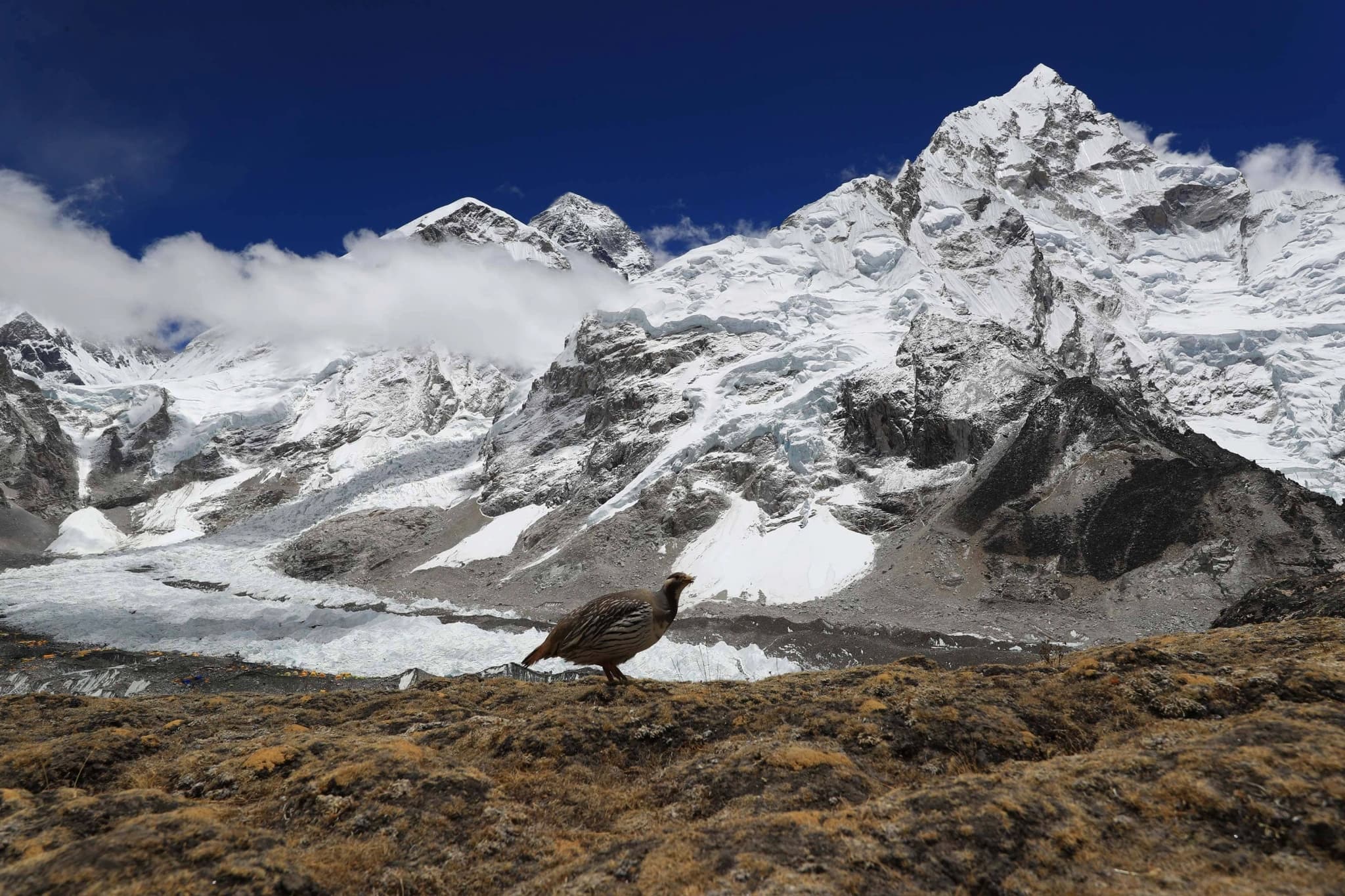
    At Everest Base Camp at 5,364m, there is time to explore the area and take in the surrounding Himalayan landscape. The actual appearance of the Base Camp varies with the climbing season, as expedition tents and equipment are generally present during the climbing periods.

    After visiting Base Camp, return to Gorakshep for the overnight stay.

    Trek Duration: Approximately 6 hours

    Elevation: Everest Base Camp 5,364m | Gorakshep 5,170m

    Accommodation: Best Available Lodge

    Meals: Breakfast, Lunch and Dinner

    5,364 mlodgeB,L,D
  14. Day 14

    Hike to Kala Patthar and Trek to Pheriche (5,545m)

    An early morning hike takes the trail towards Kala Patthar at 5,545m, one of the most popular viewpoints for seeing Mount Everest and the surrounding peaks.

    The viewpoint offers close views of Everest along with Nuptse, Pumori and other mountains around the Khumbu Valley. After spending time at Kala Patthar, descend back through Gorakshep and continue towards Pheriche at 4,280m.

    The significant descent brings the trail back into a lower and more open valley environment.

    Trek Duration: Approximately 6–7 hours

    Elevation: Kala Patthar 5,545m | Pheriche 4,280m

    Accommodation: Deluxe Lodge

    Meals: Breakfast, Lunch and Dinner

    5,545 m Deluxe LodgeB,L,D
  15. Day 15

    Trek to Namche Bazaar (3,440m)

    The return journey continues through the lower Khumbu. From Pheriche, the trail gradually descends through familiar villages and mountain landscapes before reconnecting with the route towards Namche Bazaar.

    As the elevation decreases, vegetation becomes more noticeable again and the surrounding landscape changes from the barren high-altitude terrain to forests and greener valleys. After a long day on the trail, reach Namche Bazaar for the overnight stay.

    Trek Duration: Approximately 7–9 hours

    Accommodation: MLN Lodge

    Meals: Breakfast, Lunch and Dinner

    3,440 mMLN LodgeB,L,D
  16. Day 16

    Trek to Lukla (2,840m )

    The final trekking day follows the Dudh Koshi Valley from Namche towards Lukla. The trail passes through forests, Sherpa villages and several suspension bridges along the route.

    The walk gradually returns to the lower elevations of the Khumbu before reaching Lukla, where the trekking section of the journey comes to an end.

    Trek Duration: Approximately 7–8 hours

    Accommodation: MLN Lodge

    Meals: Breakfast, Lunch and Dinner

    2,840 mMLN LodgeB,L,D
  17. Day 17

    Fly to Kathmandu ( 1,340m)

    After breakfast, transfer to the Lukla airport for the flight back to Kathmandu. The flight is subject to weather and local flight conditions.

    After arriving in Kathmandu, transfer to the hotel. The rest of the day is free for rest or personal activities.

    Accommodation: 5-Star Hotel

    Meals: Breakfast

    1,340 m5-Star HotelB
  18. Day 18

    Final Departure

    The Best of Everest Trek comes to an end today. After breakfast, transfer to the airport according to the international flight schedule for the onward journey.

    Meals: Breakfast

    B

Dates & Availability

01Pick your start date

Runs any day, for your party only
Loading calendar…

Start dates open a week ahead, giving time to arrange permits, flights and your team.

02Your private trip

Private departure18 days

Start

Choose on the calendar

Return

18 days later

From

$2,399per person

Twin-share rate. The trip runs privately for your party on the date you choose.

Cost breakdown

What's included

  • Round-trip flight Kathmandu to Lukla and back

  • Teahouse accommodation throughout the trek

  • Three meals per day (breakfast, lunch, dinner) on trail

  • Licensed, experienced trekking guide

  • Porter to carry your luggage

  • Sagarmatha National Park entry permit ($30)

  • Khumbu Pasang Lhamu Rural Municipality fee ($20)

  • All permits, logistics and acclimatization planning (Summit 8000 package)

  • Pre-trek briefing and route preparation in Kathmandu

What's not included

  • International flights to and from Kathmandu

  • Nepal visa fee (obtained on arrival)

  • Travel insurance covering high-altitude trekking and emergency helicopter evacuation

  • Personal trekking gear and equipment

  • Tips for guide and porter (customary)

  • Personal snacks, drinks, and extras at teahouses (hot drinks, charging fees, Wi-Fi)

  • Emergency helicopter evacuation costs (if not covered by insurance)

  • Hotel accommodation in Kathmandu (before/after trek)

  • Any costs arising from delays due to weather, flight cancellations, or illness

Good to Know

Gears List

Clothing (Layering System)

Base Layers (Moisture-wicking)
  • Thermal tops (2–3)

  • Thermal bottoms (2)

  • Quick-dry t-shirts (3–4)

Mid Layers (Insulation)
  • Fleece jacket or pullover

  • Lightweight down jacket

Outer Layers (Protection)
  • Waterproof jacket (Gore-Tex or similar)

  • Waterproof pants

Trekking Clothes

  • Trekking pants (2–3 pairs)

  • Hiking shorts (optional)

  • Warm hat / beanie

  • Sun hat or cap

  • Buff or neck gaiter

Innerwear
  • Underwear (5–7 pairs)

  • Sports bras (if needed)

Heavy Insulation (Very Important)

  • Thick down jacket (for cold nights & high altitude)

  • Insulated gloves (waterproof)

  • Inner gloves (liner)

Footwear

  • Trekking boots (well broken-in)

  • Camp shoes / sandals

  • Warm wool socks (4–5 pairs)

  • Liner socks (optional)

  • Gaiters (optional, for snow)

Bags & Storage

  • Duffel bag (for porter, ~60–70L)

  • Daypack (20–30L)

  • Waterproof backpack cover

  • Dry bags / packing cubes

Sleeping Gear

  • Sleeping bag (-10°C to -20°C recommended)

  • Sleeping bag liner (adds warmth)

Toiletries & Personal Items

  • Toothbrush & toothpaste

  • Wet wipes / tissue paper

  • Hand sanitizer

  • Sunscreen (SPF 50+)

  • Lip balm (with SPF)

  • Small quick-dry towel

  • Nail clipper

First Aid & Medications

  • Personal medications

  • Diamox (for altitude sickness)

  • Paracetamol / Ibuprofen

  • Blister kit (Compeed, tape)

  • Band-aids

  • Antiseptic cream

  • ORS (hydration salts)

Accessories & Gear

  • Trekking poles (highly recommended)

  • Sunglasses (UV protection)

  • Headlamp (with extra batteries)

  • Water bottles (2L total)

  • Thermos (for hot water)

  • Power bank / solar charger

  • Camera / phone

Snacks & Energy

  • Energy bars

  • Dry fruits & nuts

  • Chocolate

  • Electrolyte powder

Important Documents

  • Passport

  • Travel insurance (must cover high altitude trekking)

  • Permits (Sagarmatha National Park & Khumbu Pasang Lhamu permit)

  • Cash (Nepali rupees)

Optional but Useful

  • Book / Kindle

  • Cards / small games

  • Notebook & pen

  • Lightweight crampons (if trekking in winter)

Pro Packing Tips

  • Pack light but smart (porter limit is usually 15kg)

  • Use layers instead of bulky clothing.

  • Keep essentials in your daypack.

  • Avoid cotton (it stays wet and cold)

Best Time for the Best of Everest Trek

The best months for the Best of Everest Trek are generally spring, from March to May, and autumn, from late September to November. During these months, the weather is usually more stable, the mountain views are clearer, and daytime conditions are more comfortable for long trekking days.

October and November are especially popular for the Everest region because of the clear mountain views. Spring brings warmer days and blooming rhododendrons along the lower sections of the trail.

Winter is also possible for experienced trekkers who are comfortable with cold conditions. The higher sections around Gokyo, Lobuche, Gorak Shep and Kala Patthar can be very cold, and snowfall can affect the trail.

The monsoon months are less predictable. Rain affects the lower trails, while cloud and poor visibility can also cause delays to flights between Kathmandu and Lukla. For this reason, spring and autumn remain the preferred seasons for this trek.

How Difficult Is the Best of Everest Trek?

The Best of Everest Trek is a challenging high-altitude trek, mainly because of the elevation and the number of consecutive trekking days rather than technical climbing.

The route reaches Gokyo Ri at 5,357m, Everest Base Camp at 5,364m and Kala Patthar at 5,545m. At these elevations, the amount of oxygen in the air is significantly lower than at sea level, so even a normal uphill walk can feel demanding.

Most trekking days involve around 5 to 8 hours of walking, with some longer days depending on trail conditions and the pace of the group. The section from Gokyo towards Phortse and the later approach to Everest Base Camp involve uneven and rocky mountain trails.

Regular walking, hiking, running, cycling or other cardiovascular activities before the trek can help build the stamina needed for the journey. The most important thing is not speed. A steady pace and enough time for rest are much more useful at high altitude.

Altitude and Acclimatization

Altitude is one of the main things to consider on the Best of Everest Trek. The itinerary is designed to increase elevation gradually and includes two acclimatization days before reaching the highest parts of the route.

The first acclimatization day is around Namche and Syangboche, where the group can take a short hike to a higher elevation before returning to Namche.

A second acclimatization day is planned at Dingboche, with a hike towards Nagarjun Hill before returning to the village.

The route also spends time at Gokyo before crossing towards Phortse and continuing to the Everest Base Camp side. These rest and gradual ascent days are an important part of the itinerary rather than simply extra days added to the trip.

READY TO TAKE ON
THE CHALLENGE?

Summit 8000 Logo

CREATE YOUR OWN ADVENTURE

Design a personalized journey around your interests, schedule, and travel style, with flexible itineraries, private experiences, and expert guidance tailored specifically to you.

One Network, Complete Mountain Support

Part of the Wider Summit8000 Ecosystem

Summit8000 is supported by a wider ecosystem of services connected with our leadership, covering key aspects of the journey from accommodation and transportation to healthcare, insurance and helicopter services.

Accommodation
Kongde Resort · KongdeSherpa Hotel · PhakdingLama Lodge · Kothe, Mera RegionMountain View Resort · Khare, Mera Region
Healthcare & Medical Support
Sherpa Khangri Hospitals · PhakdingMera Clinic · Mera RegionGokyo Clinic · Gokyo
Helicopter Services
Heli EverestHeli Bhutan
Insurance
Altitude Assistance · Insurance Services
Flight & Ticketing
Everest Connection · Airline TicketingHeli Connection · Helicopter Booking

From accommodation and transportation to medical assistance, insurance and helicopter services, the wider Summit8000 ecosystem helps coordinate essential support throughout the journey.

From$2,399

Our Newspaper

Subscribe to Newspaper

Sign up for the Summit8000 newsletter and stay up to date with our latest news, exciting updates, expedition stories, and important announcements.

Chat with us