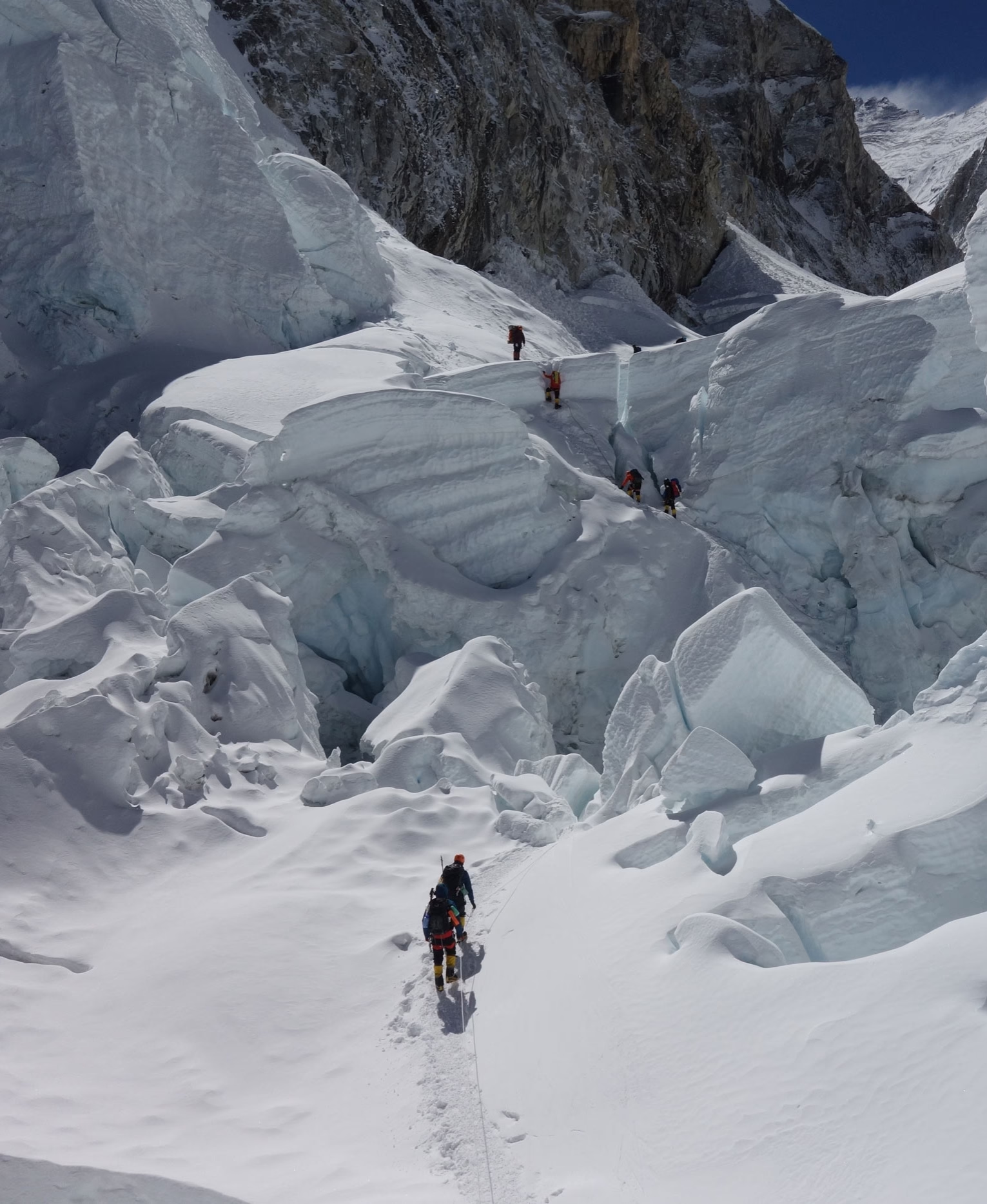
Khumbu Icefall
The Khumbu Icefall is one of the first and most dangerous obstacles on the Everest climbing route from the Nepal side. Located between Everest Base Camp and Camp I, this section of the Khumbu Glacier looks like a frozen river that has been broken into huge blocks of ice, deep crevasses, steep walls, and hanging seracs.
Table of Contents12
For climbers heading toward the summit of Everest, the Icefall is the first major section where the mountain itself is constantly moving.
The glacier does not remain in the same position. Large blocks of ice shift, cracks open and close, and sections of the route can change during the climbing season. This is what makes the Khumbu Icefall different from many other difficult sections of Everest. A steep slope or rock face may remain almost the same for weeks, but the Icefall is continuously changing.
Conrad Anker, who has climbed Everest three times, described the Khumbu Icefall in a CNN interview as “the most dangerous part of the technical climb of Mount Everest.” He explained that the glacier tumbles down and forms a complicated mass of crevasses and hanging ice cliffs called seracs.
And this is the main reason why crossing the Khumbu Icefall is such a serious part of an Everest expedition.
What Makes Khumbu Icefall So Dangerous
The danger of the Khumbu Icefall does not come from one particular thing.
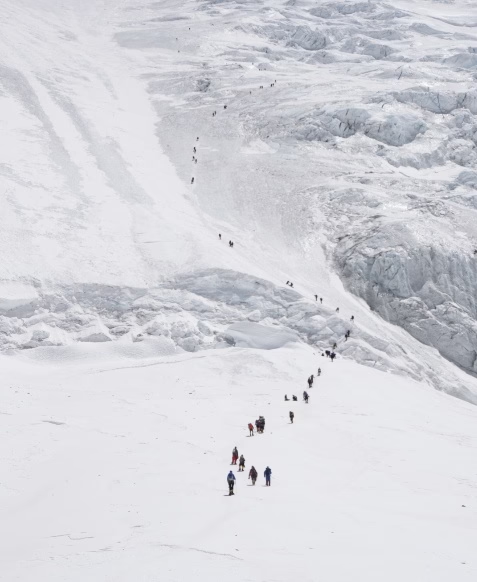
There are deep crevasses, unstable seracs, falling blocks of ice, steep sections, narrow passages, and avalanches. Climbers have to move through this changing landscape using fixed ropes and ladders placed across some of the crevasses.
Jamling Tenzing Norgay, who reached the summit of Everest with the 1996 IMAX expedition, once described the Icefall as being almost like a large river of ice boulders moving a few feet each day. He explained that climbers cannot always know when a block will collapse or when a crevasse will open or close.
This is what makes the Icefall unpredictable.
A climber may cross a ladder over a crevasse safely, but the glacier continues moving after that. The same route can look different later in the expedition. The ladders may need to be moved, ropes may need to be fixed again, and some sections may become impossible to use.
In 2026, for example, a large serac blocked the route and delayed the opening of the climbing passage. The Icefall Doctors had to find a new way through the changing glacier before climbers could continue toward the higher camps.
How Do Climbers Cross the Khumbu Icefall
Crossing the Khumbu Icefall is not like walking on an ordinary glacier.
The route is prepared with fixed ropes and aluminum ladders. Climbers clip themselves into the fixed lines and use the ladders to cross wide crevasses. On steeper sections, the fixed ropes provide protection while climbing up or down the broken ice.
But these ropes and ladders do not make the Icefall safe. They only create a route through an otherwise difficult section.

The route is established and maintained every year by the Icefall Doctors, a team of experienced Nepali high-altitude workers working under the Sagarmatha Pollution Control Committee (SPCC). The SPCC says the team normally opens the route in early April and maintains it throughout the spring climbing season because the Icefall remains unstable and constantly changes.
Their work starts before most climbers are ready to move toward the higher camps.
They have to inspect the glacier, find a workable passage through the crevasses and seracs, install ropes and ladders, and continue checking the route after climbers have started using it.
So when an Everest climber crosses the Khumbu Icefall, the path may look like a fixed route. In reality, it is a route that has been created inside a moving glacier.
Why Do Climbers Cross Khumbu Icefall Early in the Morning
There is a reason Everest climbers do not normally wait until the middle of the day to cross the Icefall.
The Icefall becomes more active as temperatures rise. Warmer conditions can increase melting and movement of the glacier, while falling ice and serac collapses are major concerns.
For this reason, climbers usually start very early and try to pass through the Icefall during the colder part of the day.
Jamling Tenzing Norgay also pointed out that the Icefall becomes more unpredictable later in the day when the sun warms the ice and movement increases.
The early start is therefore not simply about reaching Camp I sooner.
It is about spending less time inside one of the most unstable sections of the Everest route.
The Icefall Doctors: The People Who Prepare the Route
Before most foreign climbers enter the Khumbu Icefall, a small team of Nepali climbers has already spent weeks working inside it.
These are the Icefall Doctors.
Their job is not to make the Icefall safe in the normal sense. That is impossible. Their job is to find and maintain the safest practical route through the constantly changing glacier.
The SPCC has been responsible for establishing and maintaining the climbing route through the Khumbu Icefall since 1997. It says a team of eight Icefall Doctors works on the route during the spring season.
They install ladders over crevasses, fix ropes, inspect the route and change sections when the glacier moves.
And there is another important part of their work.
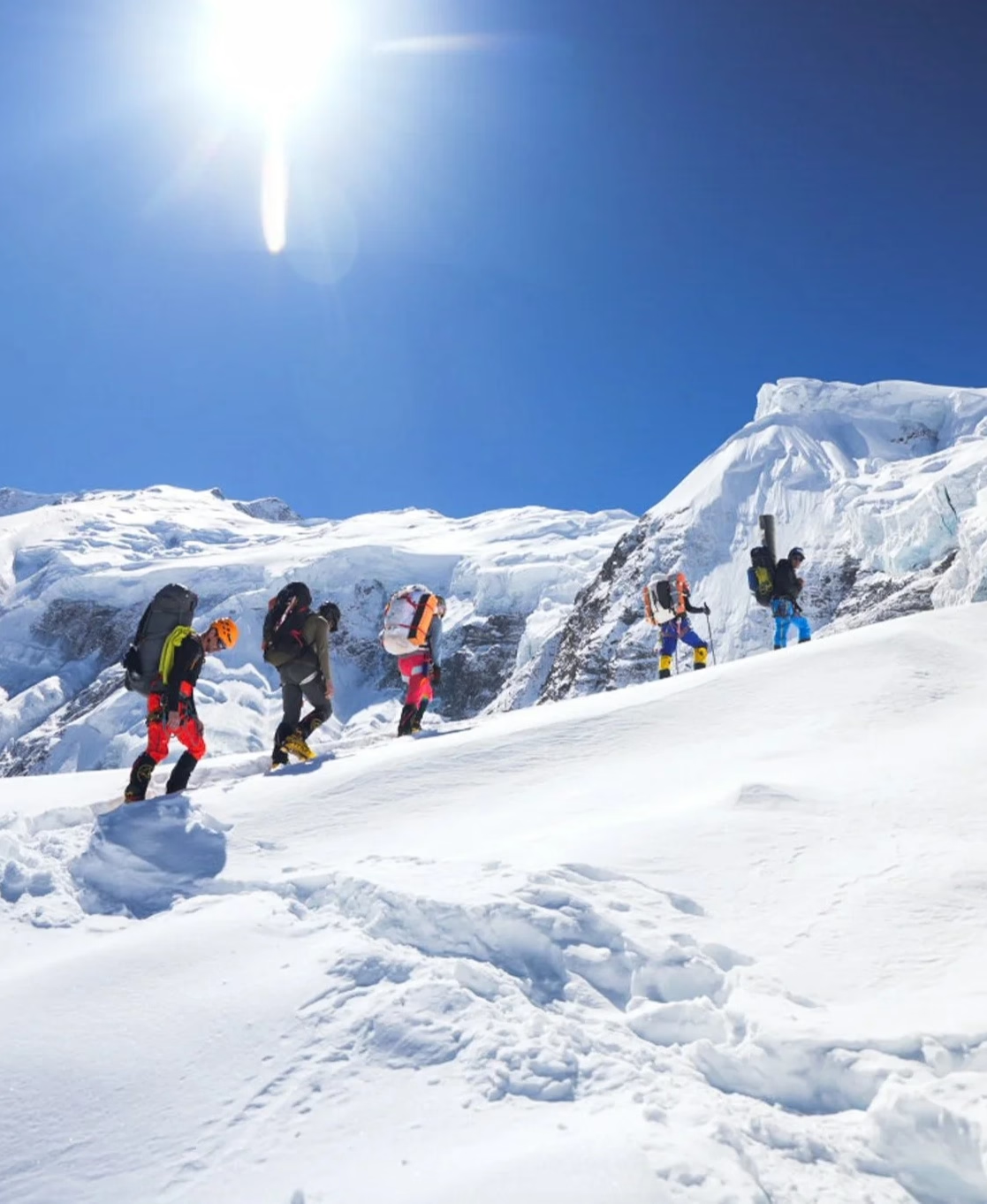
They are not only preparing the route for visiting climbers. Nepali mountain workers often make repeated trips through the Icefall while carrying tents, food, oxygen, ropes, climbing equipment and other supplies toward the higher camps.
Conrad Anker has pointed out that Nepali climbers and Sherpas spend more time inside the Icefall than many visiting climbers because they repeatedly travel through it while stocking the higher camps.
That repeated exposure is an important part of understanding the real risk of the Khumbu Icefall.
Khumbu Icefall and Sherpa Climbers
The danger of the Icefall is not experienced equally by everyone on an Everest expedition.
A climber attempting the summit may cross the Icefall a few times during the expedition. Mountain workers can cross it many more times while transporting equipment and supplies.
Jamling Tenzing Norgay made the same point when discussing the Icefall. He explained that Sherpas carrying loads face greater exposure because they have to make repeated trips through the same unstable terrain.
This is one reason the Khumbu Icefall is closely connected with the history of Sherpa mountaineering.
The people who make the Everest expedition possible are often the same people who spend the most time working inside its most unstable section.
Khumbu Avalanche: The 2014 Disaster
The danger of the Khumbu Icefall became painfully clear on April 18, 2014.
That morning, a large serac collapsed in the Icefall and triggered an avalanche. Sixteen Nepali mountain workers were killed, making the disaster one of the deadliest single accidents in Everest's climbing history.
Most of the victims were working in the Icefall while carrying supplies toward the higher camps.
The accident also showed why the Icefall cannot simply be treated as another climbing route.
The fixed ropes were already there. The climbers were following an established route. But the danger came from above and from the glacier itself.
Kaji Sherpa, one of the survivors, later described how frightening the Icefall was. He said that he was always scared there, but the workers still had to pass through the crevasses and tried to move through them quickly.
Another survivor, Ang Kami Sherpa, recalled being tied to a rope and carrying gas when they suddenly heard the sound of the avalanche.
These accounts explain the danger better than simply saying that the Icefall is “deadly.”
The people who have actually worked there know that the biggest problem is uncertainty. The glacier does not give much warning before a large section of ice breaks.
Can the Khumbu Icefall Change During an Expedition
Yes.
This is one of the most important things to understand about climbing through the Khumbu Icefall.
A climber does not cross the same static route every time.
The glacier continues to move. Crevasses can widen, ladders can become unstable, ice blocks can shift and new obstacles can appear. The Icefall Doctors therefore continue inspecting and maintaining the route during the season.
In some seasons, changes can be small and the route only needs minor adjustments.
In other situations, a major serac or unstable section can block the route completely.
The events of 2026 gave a recent example of this problem. A large serac blocked the route through the Icefall and delayed access toward the higher parts of Everest until the route could be changed.
This is why an Everest expedition cannot be planned only according to a fixed calendar.
The mountain conditions still have the final say.
Khumbu Icefall Bodies and Rescue
The Khumbu Icefall has also been the site of many accidents and deaths over the history of Everest climbing.
Recovering a body from the Icefall is extremely difficult because the same conditions that caused the accident may still be present. A body can be inside a deep crevasse, covered by snow or trapped underneath large blocks of ice.
A recovery team therefore has to enter the same unstable environment again.
This is also why claims about the number of bodies inside the Khumbu Icefall need to be treated carefully. It is not accurate to simply say that hundreds of bodies are lying inside the Icefall. Everest deaths have occurred across different sections of the mountain, while the Icefall is only one part of the route.
The movement of the glacier can also change what is visible from one year to another.
Does Climate Change Affect the Khumbu Icefall
Climate change is another concern for the future of the Khumbu Glacier.
Researchers who studied the glacier found that the ice inside the Khumbu Glacier was warmer than expected. The research showed that even the coldest ice recorded was significantly warmer than the average annual air temperature at the study locations.
A warmer glacier can affect melting, water movement and the physical condition of the ice.
But it is important not to connect every crack, serac collapse or change in the Icefall directly to climate change. The Khumbu Icefall is naturally unstable and has always been a moving part of the glacier.

What climate change adds is another long-term pressure on an already dynamic glacier.
For climbers and expedition operators, the practical concern is that changing glacier conditions can also mean changing climbing conditions.
Is Khumbu Icefall the Most Dangerous Part of Everest
The answer depends on what kind of danger is being discussed.
Everest has many different hazards. Extreme altitude, low oxygen, severe weather, steep climbing, avalanches and exhaustion all become serious problems as climbers move higher.
But the Khumbu Icefall is widely regarded as one of the most dangerous and technically hazardous sections of the standard Nepal-side route.
Conrad Anker, after climbing Everest three times and spending more than ten days in the Icefall over his climbing career, described it as the most dangerous part of the mountain's technical climb. He also explained that the glacier is moving every day and that even thinking about being inside it still makes him uncomfortable.
The important point is that the danger of the Icefall is not simply its altitude.
It is the moving ground.
A climber can prepare for the altitude. Fixed ropes can help with steep terrain. Ladders can provide a way across crevasses. But nobody can completely control when a serac will break or how the glacier will change.
What Climbers Should Know About Khumbu Icefall
For anyone planning an Everest expedition from Nepal, the Khumbu Icefall is more than just the first obstacle on the route.
It is a section that needs to be crossed with proper expedition planning, experienced high-altitude guides and respect for changing mountain conditions.
The route is maintained by the Icefall Doctors, but the route cannot remove the natural danger of the glacier. Climbers still have to move efficiently, follow the fixed lines, use the ladders correctly and listen to the expedition team's decisions about the current condition of the Icefall.
The timing also matters. Early morning crossings are preferred because conditions are generally colder and the exposure to later-day warming is reduced.
Most importantly, the Icefall should not be viewed as a challenge that can simply be conquered through confidence.
It is a moving glacier.
To Sum Up
To sum up, the Khumbu Icefall is among the most dangerous sections of the Everest climbing route from the Nepal side.
It is the gateway between Everest Base Camp and the higher camps, but it is also a constantly changing landscape of crevasses, seracs, ladders, fixed ropes and unstable ice.
The work of the Icefall Doctors makes a route possible through this difficult terrain, while Sherpa mountain workers repeatedly enter the Icefall to carry the equipment and supplies needed for an Everest expedition.
The 2014 avalanche showed how quickly the situation can change, while recent events have again shown that even an established route can be blocked or changed by the movement of the glacier.
For climbers heading toward Everest's summit, the journey does not begin with the final summit push.
It begins by crossing this moving river of ice.
Continue reading
Ready to see it for yourself?
Tell us your dates, experience and goals. Our Sherpa-led team will shape the route, permits and logistics around you.
Prefer to chat?
WhatsApp usSummit 8000