
Summit8000Summit8000
Everest + Lhotse Expedition – 60 Days

Everest + Lhotse Expedition – 60 Days

Destination
Nepal
Duration
60 Days
Trip Difficulty
Challenging
Meals
B, L, & D
Max. Elevation
8848.86m
Best Time
April and May

Trip overview

The Everest + Lhotse Expedition is a challenging high-altitude mountaineering journey that gives climbers the opportunity to attempt two of the world's highest mountains in a single expedition. Mount Everest (8,848.86m), the highest mountain on Earth, and Mount Lhotse (8,516m), the fourth-highest, share much of the same climbing route from the Nepal side, making it possible to plan both summit attempts within one expedition.

The journey begins in Kathmandu, followed by a scenic trek through the Khumbu region to Everest Base Camp (5,364m). After reaching base camp, climbers spend time acclimatizing, preparing their equipment, and completing climbing rotations through Camps I, II, and III. These rotations are an important part of the expedition, helping climbers prepare for the demanding conditions at higher elevations before moving into the summit phase.

The first summit objective is Mount Everest, following the standard South Col route. After reaching the summit, climbers descend to Camp IV at the South Col or to a lower camp, depending on weather, route conditions, and their physical condition. Those proceeding with the Lhotse climb will then prepare for the second summit attempt, ascending the steep Lhotse Face toward the summit of Mount Lhotse at 8,516 meters. The timing of this attempt depends on the weather window, the condition of the climbing route, and the assessment of the expedition leaders.

Completing both summits requires more than reaching Everest's summit and continuing toward another peak. Climbers must manage their energy, oxygen supply, recovery, and time carefully throughout the process. Our Sherpa-led expedition team coordinates the climbing strategy, high-altitude logistics, and support required for both objectives.

The 60-day itinerary includes the approach trek, acclimatization, climbing rotations, summit attempts, descent from base camp, and return to Kathmandu. Although the itinerary is planned to accommodate both mountains, the actual climbing schedule may change due to weather, mountain conditions, or other unavoidable circumstances. The safety of the climbers and expedition team remains the priority throughout the journey.

For experienced mountaineers looking to take on two major Himalayan summits in one expedition, the Everest + Lhotse Expedition offers an opportunity to attempt the world's highest mountain and its neighboring 8,000-meter peak as part of one carefully planned climbing journey.

Why Climb Everest and Lhotse Together?

Two Summits. One Expedition. A Bigger Challenge.

For climbers looking to take on more than one 8,000-metre peak, combining Everest and Lhotse in the same expedition offers a unique mountaineering challenge. Since both mountains share much of the climbing route from the Nepal side, climbers can plan their Lhotse ascent immediately after their Everest summit attempt, without having to start an entirely separate expedition.

The challenge, however, goes beyond reaching two summits. After climbing Everest, climbers must manage their recovery, energy and oxygen before moving towards Lhotse. The steep Lhotse Face and the demanding climb above Camp III make the second summit attempt particularly challenging.

This expedition is suited to experienced mountaineers who are prepared for the physical and mental demands of climbing two 8,000-metre peaks in one season. It is an opportunity to make the most of a single Himalayan climbing season and take on two of the world's highest mountains as part of one expedition.

Experienced Expedition Leaders & Summit Guides

Climbing Everest and Lhotse in one expedition requires more than a well-planned itinerary. Experience at high altitude, knowledge of the climbing routes and the ability to make sound decisions during changing mountain conditions are equally important.

The expedition is led by Temba Tsheri Sherpa, Founder and Expedition Leader of Summit8000. He reached the summit of Mount Everest in 2001 at the age of 16, earning recognition as the youngest person to summit Everest at that time and a Guinness World Record. His experience in Himalayan mountaineering and expedition management plays an important role in planning and leading the climb.

Led by Experienced Sherpas Who Know Everest

Joining the expedition is Lhakpa Gelu Sherpa, a 24-time Everest summiteer with extensive experience on the mountain. Having reached the summit of Everest numerous times, he brings first-hand knowledge of the South Col route, high-altitude climbing conditions and the challenges climbers face during summit operations.

Together with our experienced Sherpa climbing team, they lead the expedition through its acclimatization rotations, higher-camp preparations and planned summit attempts on both Everest and Lhotse. Their experience and understanding of the mountains help guide important decisions throughout the climb, with the safety of the climbing team remaining the priority.
Day By Day Itinerary

60 days: Complete day-by-day expedition route and elevation guide for Everest + Lhotse Expedition – 60 Days.

  1. Day 1

    Arrival in Kathmandu, Airport Transfer & Hotel Check-in

    Welcome to Kathmandu. Our team member from Summit 8000 will be waiting for you at the arrival gate with your name. After meeting, you will have a small meet-and-greet ceremony where our team member will put a mala and tika on you and drive you to Thamel. In the evening, you can explore the hustling and bustling streets of Thamel.

  2. Day 2

    Expedition Briefing, Document Verification & Gear Inspection

    You will meet your guide, who will give you instructions on how to buy or rent the required gear and equipment. You will need to select high-quality materials for your safety. You will re-check the missing equipment and conduct proper inspections. You should try everything and check whether it works properly. Once everything is done, your permits will be ready for the climb. If you still have time, you may do some sightseeing in Kathmandu Valley. Your guide will also brief you on everything about the expedition.

  3. Day 3

    Fly to Lukla and Trek to Phakding

    Early in the morning, you will have breakfast, and our company vehicle will pick you up from your hotel and drop you at the airport. After that, you will fly to Lukla. The flight takes around 35 minutes, offering views of valleys and mountains. Upon reaching Lukla, you will trek to Phakding through lush green forests of pine and rhododendron.

  4. Day 4

    Trek to Namche Bazaar

    You will have an early morning hike to Namche Bazaar, the market hub of the Khumbu region. You will walk across beautiful suspension bridges, including the Tenzing-Hillary Suspension Bridge, before continuing through the beautiful valleys and reaching Namche Bazaar.

  5. Day 5

    Acclimatization Day at Namche with a Short Hike

    Today is your acclimatization day at Namche Bazaar. You will hike to the Everest View Hotel, from where you can witness breathtaking views of Mount Everest (8,848 m) and surrounding peaks such as Lhotse (8,516 m), Nuptse (7,861 m), Ama Dablam (6,812 m), and many more. You may also visit the Sherpa Museum to learn about their history, culture, traditions, and bravery.

  6. Day 6

    Trek to Tengboche

    You will trek to Tengboche through red and white rhododendron forests along the Dudh Koshi River. Following the streams, you will cross suspension bridges and continue toward your destination. Upon reaching Tengboche, you can visit the famous Tengboche Monastery, one of the largest monasteries in the Everest region.

  7. Day 7

    Trek to Dingboche

    You will have an early morning walk from Tengboche to Dingboche. After breakfast at the tea house, you will cross some wooden bridges and initially descend through green forests. You will then ascend from the Deboche villages, where you can witness the first glimpse of the alpine shrubs.

  8. Day 8

    Acclimatization Hike at Dingboche

    As you get closer to Everest Base Camp, acclimatization is important to help your body adapt to the increasing altitude. You will have a short walk around the village, passing small chortens and prayer flags. You will hike toward Nangkartshang Peak, located at an altitude of 4,700 m, before returning to Dingboche. This hike will help you acclimatize to the high altitude.

  9. Day 9

    Trek to Lobuche

    We understand your curiosity to reach Everest Base Camp and begin your climb, but it is important to allow your body to adjust to the high altitude and reduce the risk of AMS. You will follow well-marked terrain, crossing small streams and agricultural areas. As you continue, you will begin to see rocky surroundings, glacier moraines, and uneven trails.

  10. Day 10

    Trek to Lobuche Base Camp ( 5,000m)

    Today, you will trek toward Lobuche Peak Base Camp, leaving the main trekking trail behind as you approach the rugged alpine terrain. The route takes you across rocky paths and glacial moraines, with increasingly impressive views of the surrounding Himalayan peaks. Upon reaching base camp, you will settle in, rest, and prepare your climbing equipment for the training and summit attempt ahead.

    5,000 m
  11. Day 11

    Training and Acclimatization at Lobuche (5,000m)

    Spend the day acclimatizing to the altitude and preparing for your Lobuche Peak summit attempt. Our climbing guides will review essential techniques, including the use of crampons, harnesses, ropes, and ice axes, along with basic movement on snow and ice. You will also check your climbing gear, review safety procedures, and get a briefing on the route and weather conditions before the summit push.

    5,000 m
  12. Day 12

    Summit Lobuche Peak and Descend to Base Camp (6,119m)

    Begin your summit attempt early in the morning, following your guides across rocky sections and snow-covered slopes toward the summit of Lobuche East (6,119m). Depending on conditions, you may encounter steep sections requiring fixed ropes and the use of crampons and ice axes. From the summit, enjoy spectacular views of Everest, Lhotse, Nuptse, Ama Dablam, and the surrounding Himalayan peaks before descending carefully to base camp for a well-earned rest.

    6,119 m
  13. Day 13

    Trek to Everest Base Camp

    After completing your Lobuche Peak climb, continue toward Everest Base Camp through the rugged Khumbu landscape. The trail passes across glacial moraines and rocky terrain, with views of the Khumbu Glacier and surrounding peaks along the way. Upon reaching Everest Base Camp, you will settle into the expedition camp, meet the support team, and begin preparing for the acclimatization rotations and climbing phase ahead.

  14. Day 14

    Acclimatization, Preparation & Training

    Proper acclimatization and preparation are key to a safe and successful climb. Our itinerary is carefully designed to allow gradual altitude gain, giving your body time to adapt to the Himalayan environment. Before the expedition, we recommend focused physical training that builds endurance, strength, and mental resilience. Our experienced guides also provide briefings, gear checks, and climbing preparation to ensure every climber is fully ready for the journey ahead.

  15. Day 19

    Rotation camp I, camp II, and Camp III

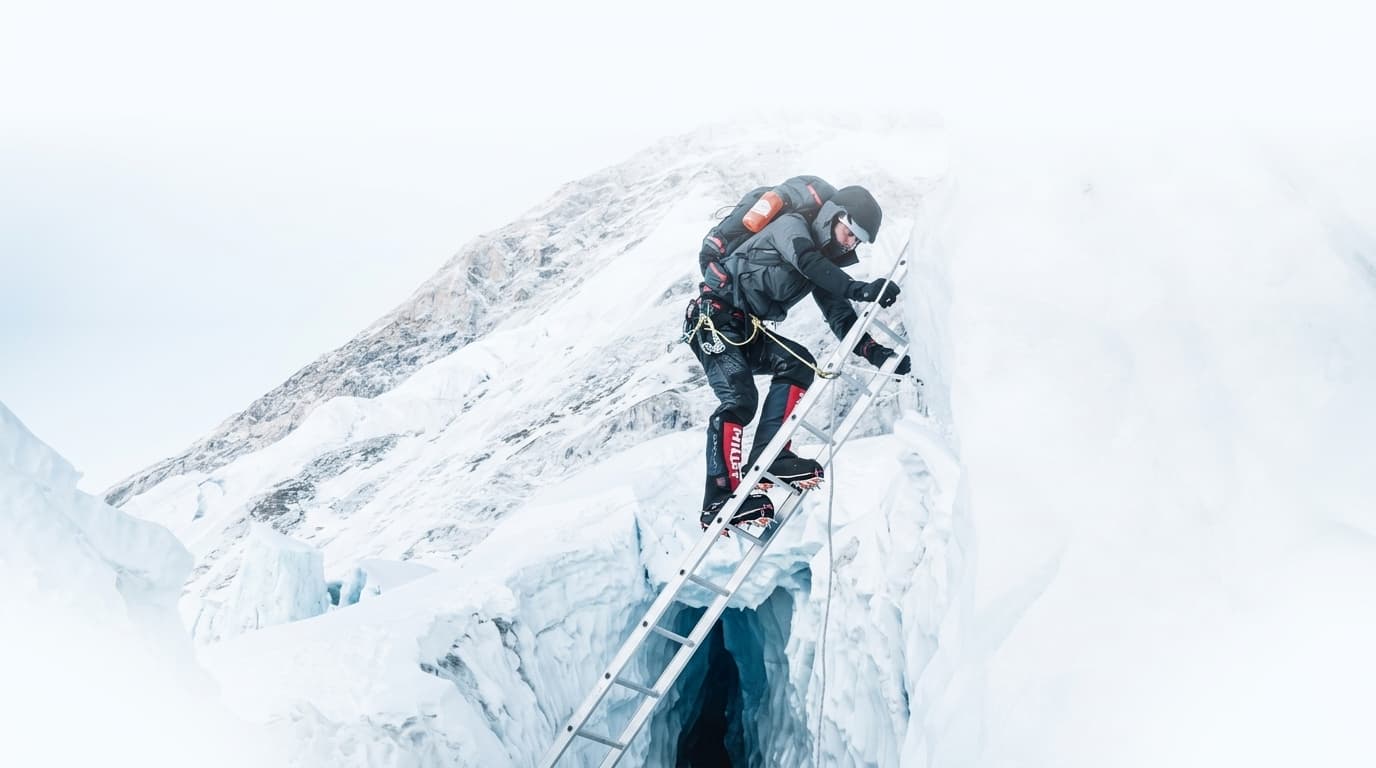
    From day 19 to 35, your true adventure spirit will test you. You will acclimate yourself in the mountains along with the rotations climbs from Camp I (6,065m), Camp II (6,400m), and Camp III (7,200m). After completing your rotations and climbs, you will do the summit push on the South Col route. To the top of the world at an altitude of 8,848.86. Please be careful, listen to your guide, and follow all rules and regulations of climbing the peak.

  16. Day 36

    Everest & Lhotse Summit Push and Descent to Base Camp

    This is the most demanding phase of the Everest + Lhotse Expedition, as climbers begin their summit attempts on two of the world's highest mountains. The team moves through the higher camps, following the fixed ropes and weather windows identified by our expedition leaders.

    The first objective is the summit of Mount Everest (8,848.86m). After reaching the summit, climbers begin their descent towards Camp III on Everest, where they can rest and recover before proceeding with the second summit objective. The decision to continue towards Lhotse depends on the climbers' physical condition, weather forecasts, route conditions, and the overall assessment of the guide team.

    Once conditions are suitable, climbers ascend towards Camp IV on Lhotse via the Lhotse Face. From Camp IV, the team prepares for the final summit push to Mount Lhotse (8,516m). After reaching the summit, climbers descend through Camp IV and Camp II before continuing towards Everest Base Camp.

  17. Day 55

    Trek down from EBC to Gorakshep

    After completing your Mount Everest and Lhotse expeditions, congratulate yourself on doing it. After that, you will trek down to Gorakshep from the EBC to rest and relax. You can enjoy your time with the locals and share your interesting stories with them. Upon reaching Gorakshep, you can again visit the Kala Patthar to witness the peak that you just summited.

  18. Day 56

    Walk down from Gorak Shep to Pheriche

    As you have already conquered the Everest and Lhotse peak and acclimated yourself, it would be easy for you to trek down from Gorakshep to Pheriche. Your trail will be descending via the alpine moraines and beautiful surroundings. You will pass through beautiful villages like the Lobuche, Thukla, and finally reach Pheriche.

  19. Day 57

    Trek down from Pheriche to Namche Bazar

    As you descend towards Namche Bazar, you will see the beautiful villages like Pangboche and Tengboche. You will go down via crossing the suspension bridges, and the scenic villages that lie on the way. Upon reaching Namche, you can relax and enjoy the beautiful views and the local foods. You can visit the different bakeries and cafes, you can take a hot shower, and enjoy your dinner.

  20. Day 58

    Namche to Luka and fly to Kathmandu

    Early in the morning, you start your journey towards Lukla, which will be an easy descent via the beautiful, well-marked trails. You can interact with the locals and enjoy your last day of adventure in the mountains. Upon reaching Lukla, you will fly to Kathmandu, which will be a 35-minute flight. Upon reaching, you can relax and then enjoy your last day in Kathmandu.

  21. Day 59

    Debriefing with the Nepal Tourism Board

    Following the successful completion of the expedition, climbers attend the official debriefing with the Nepal Tourism Board. This final process includes expedition reporting, permit closure, and sharing key updates from the climb. It marks the formal conclusion of the journey in Nepal while giving climbers time to reflect on their achievement before departure.

  22. Day 60

    Departure

    Early in the morning, you will head towards the gear and equipment shops and return the things that you rented. And the things that you bought, you can carry yourself. We will have a flight schedule for you, and according to that, we will drop you off at the airport at least 4 hours before completing your visa and immigration-related work. We hope we served you best and wish to welcome you again to climb some other mountains like the Annapurna expedition - I, Dhaulagiri, Makalu, or any other peaks.

Dates & Availability

01Pick your start date

Runs any day, for your party only
Loading calendar…

Start dates open a week ahead, giving time to arrange permits, flights and your team.

02Your private trip

Private departure60 days

Start

Choose on the calendar

Return

60 days later

Priced to your group size and itinerary. Send your dates and we'll come back with a quote.

Cost breakdown

What's included

Accommodation & Hospitality

  • 5-star hotel accommodation in Kathmandu.

  • Accommodation during the trekking and climbing periods.

  • Personal tent at Everest Base Camp.

  • Dining tent, kitchen tent and toilet tent at Everest Base Camp.

  • Full-board meals during the trek, Base Camp stay and climbing periods.

Transportation & Expedition Logistics

  • Airport pick-up and drop-off services in Kathmandu.

  • Domestic flights from Kathmandu to Lukla and return, including airport transfers.

  • Porters and yaks for transportation of expedition gear and personal loads, as per the specified expedition weight allowance.

Everest & Lhotse Expedition Permits & Official Fees

  • Mount Everest climbing permit and applicable government royalty.

  • Mount Lhotse climbing permit and applicable government royalty.

  • Garbage management and environmental fees as per Nepal government regulations.

  • All applicable government taxes and service charges.

Dedicated Sherpa & IFMGA Climbing Support

  • Experienced IFMGA-certified Mountain Guide or senior Sherpa climbing guide for summit support.

  • High-altitude Sherpa support during acclimatization rotations and summit preparation.

  • Proper high-altitude rotation schedules and summit strategy for both Everest and Lhotse.

Oxygen, Medical & Safety

  • Supplemental oxygen cylinders for the summit push.

  • Standard climbing oxygen mask and regulator (shared expedition set).

  • Medical kit at Everest Base Camp.

  • Emergency support planning during the expedition.

High-Altitude Camps & Expedition Logistics

  • Necessary climbing logistics required for the Everest summit.

  • High-altitude climbing food at Camp I, Camp II, Camp III and Camp IV.

What's not included

  • International airfare to and from Kathmandu

  • Nepal entry visa fee

  • Personal travel & medical insurance (must include high-altitude rescue & evacuation)

  • Personal climbing gear & equipment such as the (8000 m down suit, high altitude boots, down jackets, shoes, and other items

  • Personal Sherpa (1:1 private Sherpa guide)

  • Extra nights in Kathmandu due to early arrival, late departure, or flight delays

  • Tips & gratuities for guides, Sherpas, porters, and staff (customary but not mandatory

  • Emergency evacuation costs (covered by insurance only)

  • Unforeseen costs due to weather delays, route changes, government regulation changes, or natural calamities

Good to Know

Gear List

Technical Climbing Equipment

  • Climbing Helmet, Headlamp (500–700 Lumens) with Spare Batteries

  • Ice Axe with Spike and Protector, Crampons (compatible with Mountaineering Boots)

  • Climbing Harness, Ascenders/Jumar, Descenders, Belay Devices (ATC/Figure 8)

  • Carabiners (Locking and Non-Locking), Safety Cord (3m, 8mm), Tape Slings (120cm and 40cm), Dynamic Rope (6mm, 300cm)

  • Trekking Poles/Walking Stick, Swiss Knife

Head, Hand & Neckwear

  • Sun Cap, Balaclava, Wool/Fleece Hat

  • Neck Gaiter/Buff Mask, High-Neck Tops

  • Thin Fleece Gloves, Windstopper Gloves & Summit Gloves (8000m)

  • Hand and Toe Warmers

  • Sun/Glacier Glasses (UV Protection), Snow Goggles (Anti-Fog and UV Protection)

Upper & Lower Body Clothing

  • Upper Body: Short-Sleeved/Quick-Dry T-Shirts, Full-Sleeved T-Shirts, Thermal Base-Layer Tops, Midweight Tops

  • Fleece Jacket, Down Insulated Jacket, Gore-Tex Jacket

  • Lower Body: Thermal Base-Layer Bottoms, Lightweight Long Underpants, Midweight Long Underpants, Fleece Trousers

  • Trekking Pants, Down/Synthetic Insulated Pants, Gore-Tex Pants, Underwear

Footwear

  • 8000m Summit Boots, Trekking Shoes

  • Camp Booties, Slippers

  • Trekking and Climbing Socks, 8000m Summit Socks, Normal Socks

Sleeping Equipment & Bag Packs

  • Down Sleeping Bag (-30°C to -40°C), Thermo Mattress & Sleeping Bag Liner

  • Rucksacks

  • Duffel Bags

  • Stuff Sacks

Personal Essentials

  • Water Bottle (1L), Thermos (1–1.5L), Pee Bottle

  • Sunscreen (SPF 50 or higher), Lip Guard (SPF 30–50), Moisturiser/Lotion

  • Toiletries: Hand Sanitiser, Hand Wash, Toothpaste, Toothbrush, Bath Soap, Shampoo, Laundry Soap

  • Personal Items: Towel, Toilet Paper, Garbage Bags, Zip-Lock Bags, Nail Cutter

  • Rain Protection: Umbrella/Rain Poncho

READY TO TAKE ON
THE CHALLENGE?

Summit 8000 Logo

CREATE YOUR OWN ADVENTURE

Design a personalized journey around your interests, schedule, and travel style, with flexible itineraries, private experiences, and expert guidance tailored specifically to you.

One Network, Complete Mountain Support

Part of the Wider Summit8000 Ecosystem

Summit8000 is supported by a wider ecosystem of services connected with our leadership, covering key aspects of the journey from accommodation and transportation to healthcare, insurance and helicopter services.

Accommodation
Kongde Resort · KongdeSherpa Hotel · PhakdingLama Lodge · Kothe, Mera RegionMountain View Resort · Khare, Mera Region
Healthcare & Medical Support
Sherpa Khangri Hospitals · PhakdingMera Clinic · Mera RegionGokyo Clinic · Gokyo
Helicopter Services
Heli EverestHeli Bhutan
Insurance
Altitude Assistance · Insurance Services
Flight & Ticketing
Everest Connection · Airline TicketingHeli Connection · Helicopter Booking

From accommodation and transportation to medical assistance, insurance and helicopter services, the wider Summit8000 ecosystem helps coordinate essential support throughout the journey.

Everest + Lhotse Expedition – 60 Days

Our Newspaper

Subscribe to Newspaper

Sign up for the Summit8000 newsletter and stay up to date with our latest news, exciting updates, expedition stories, and important announcements.

Chat with us