- Destination
- Nepal
- Duration
- 32 Days
- Trip Difficulty
- Strenuous
- Accommodation
- Tea House and Tent
- Meals
- B, L, & D
- Max. Elevation
- 8163m
- Group Size
- 15
- Best Time
- Sept - Nov & March - May
- Video
- https://youtu.be/l7x_OrITB-I
Trip overview
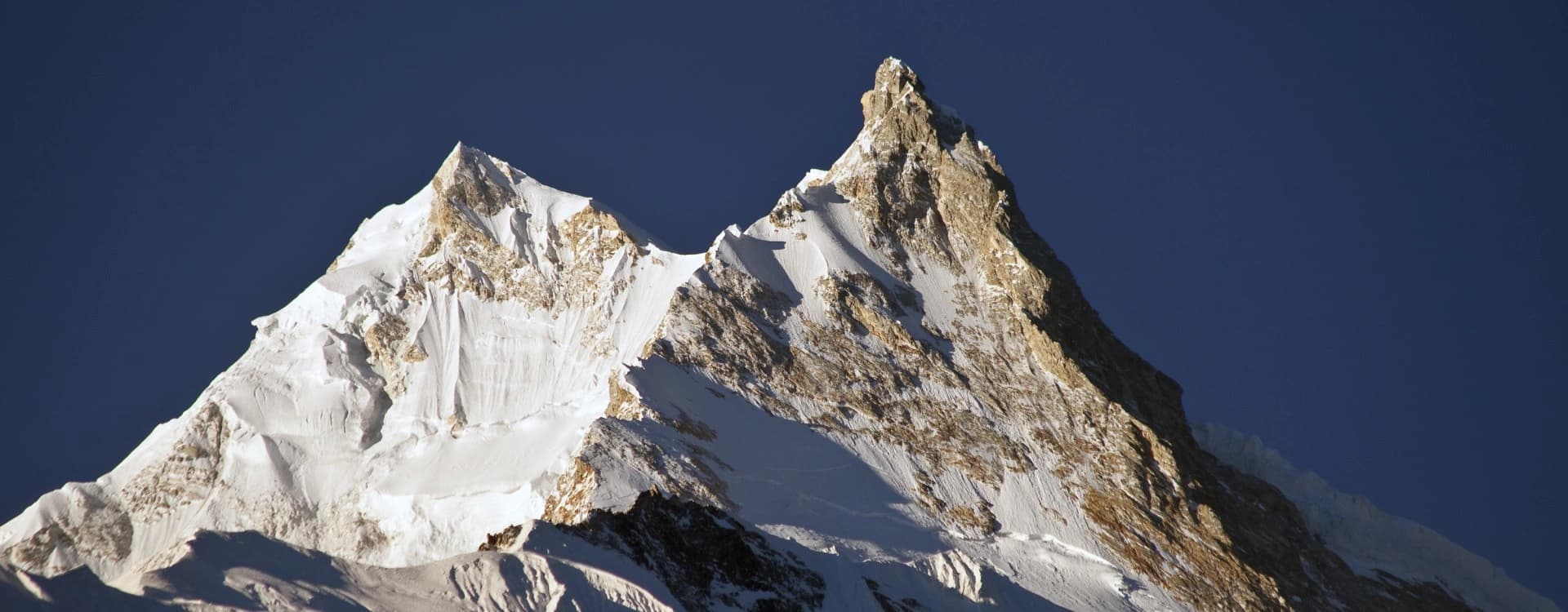
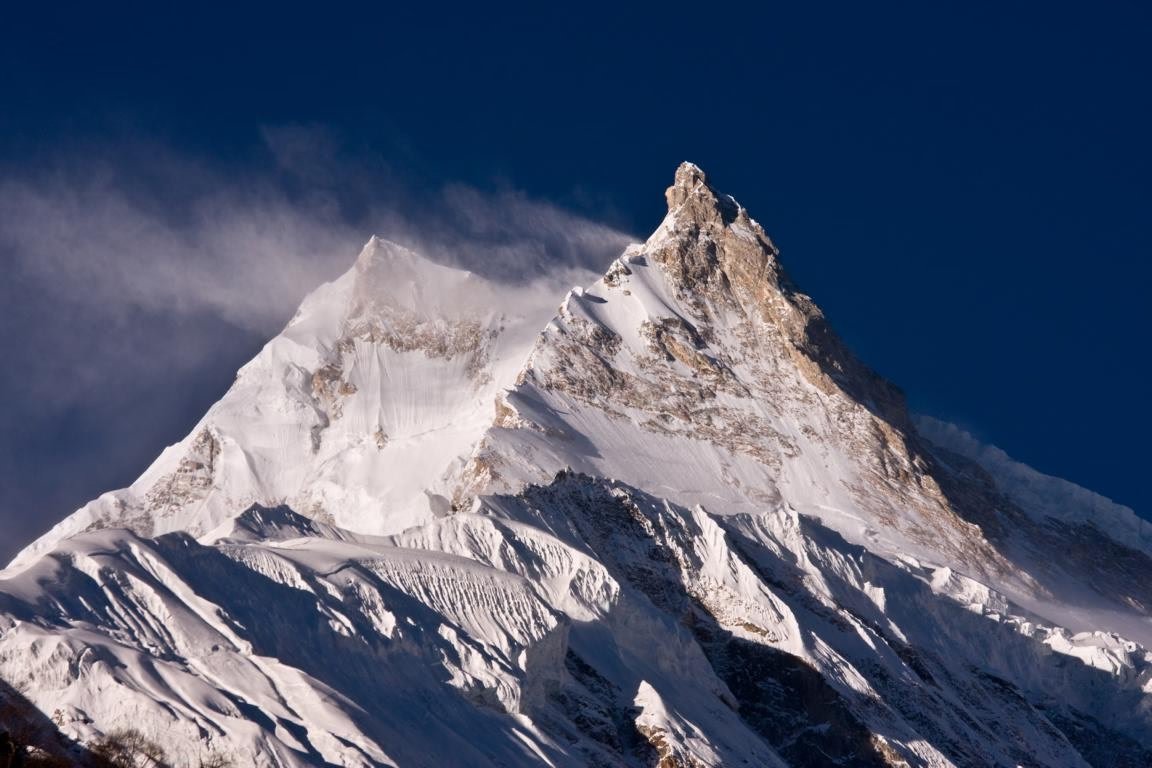
The Manaslu Expedition 2027 takes climbers to 8,163m, the summit of Mount Manaslu, the eighth-highest mountain in the world. Located in the Mansiri Himal of Nepal, Manaslu offers a demanding 8,000m climbing experience combined with a trek through remote valleys and traditional mountain villages. This 32-day expedition brings together high-altitude mountaineering, Himalayan landscapes and the distinctive culture of the Nubri Valley.
The journey begins in Kathmandu with expedition preparation and a drive to Jagat. The approach trek follows the Budhi Gandaki Valley through settlements including Deng, Namrung and Lho before reaching Sama Gaun (3,530m). After an acclimatization day, the team continues to Manaslu Base Camp at approximately 4,700–4,800m, where the expedition moves from trekking into its main climbing phase.
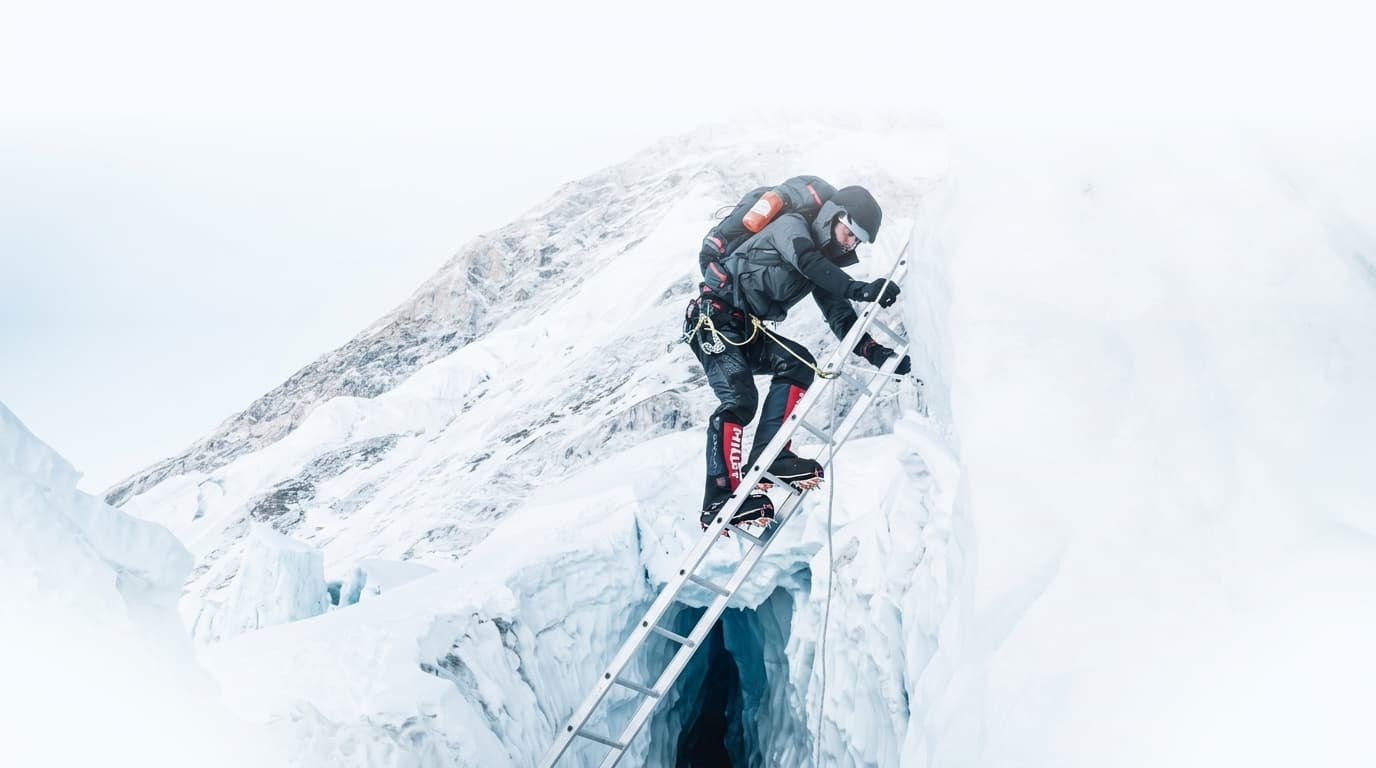
At Base Camp, climbers focus on acclimatization, technical training and equipment checks before beginning progressive rotations on the mountain. The team gradually moves through Camp I, Camp II and the higher camps as conditions allow, gaining experience with fixed ropes and high-altitude terrain. Rest and recovery periods between rotations help prepare climbers for the final summit attempt.
The Manaslu summit push begins when weather and mountain conditions provide a suitable window. Supported by experienced climbing Sherpas and high-altitude expedition logistics, climbers ascend toward the 8,163m summit via the established Northeast Face route. Steep snow and ice sections, fixed ropes and extreme altitude make physical preparation, proper acclimatization and careful decision-making essential throughout the climb.
After the climbing phase, the expedition descends to Base Camp before continuing through the Manaslu Circuit toward Dharamshala and Larkya La Pass (5,106m). The route then descends to Bhimtang and continues to Tilije before the drive back to Kathmandu. This return journey offers a different perspective of the region, passing through high alpine landscapes and traditional Himalayan settlements.
With a structured acclimatization schedule, progressive climbing rotations, experienced Sherpa support and carefully planned logistics, the Manaslu Expedition with Summit8000 offers a challenging introduction to 8,000m mountaineering. For climbers planning to attempt Mount Everest (8,848m), Manaslu can also be an opportunity to gain valuable experience with extreme altitude, high-camp rotations and the demands of an 8,000m summit attempt. While it does not replace the technical skills and preparation required for Everest, it can form an important part of a climber's wider Himalayan experience.
Whether your goal is to summit Manaslu or build experience for a future Everest Expedition, Summit8000 provides expedition planning, climbing support and high-altitude logistics to help you prepare for your next objective. Contact our team to discuss expedition dates, costs, preparation requirements and the right climbing plan for your experience.
Highlights of Manaslu Peak Climbing
Climb the world’s 8th highest peak at an altitude of 8,163 meters (26,781 feet) above sea level
Explore cultural sites and prepare for the trek.
Enjoy Trisuli Valley and local villages.
Riverside trails, lush forests, terraced fields.
Traditional villages, views of Manaslu, suspension bridges.
Rhododendron forests and local cultural experiences.
Stunning Himalayan panoramas and Sherpa village arrival.
Glacier views, Base Camp setup, and acclimatization start.
High-altitude trekking and climbing practice.
Technical climbing with fixed ropes to reach the summit.
Scenic return and camp breakdown.
Cross Larkya La Pass and enjoy alpine panoramas.
Road transfer with cultural reflections.
Why Should You Choose the Manaslu Expedition?
There are many reasons why you should choose the Manaslu expedition in Nepal, such as it is the 8th highest mountain in the world at 8,163m, which is a true Himalayan giant. The expedition route is significantly less crowded than the Everest or Annapurna expeditions.
The route is well-priced without compromising the experience. The journey offers a genuine, raw high-altitude climbing experience that is unique in itself. You will also be ready for Everest or Annapurna in the future if you decide to climb. You will walk through the stunning and diverse landscape of the Manaslu Conservation Area.
On your journey to the 8000 meters, you will experience rich cultural immersion through Gurung and Tibetan-influenced villages. We will provide an excellent Sherpa support ratio, ensuring safety and summit success. When choosing peak climbing, you get a high summit success rate compared to other 8000m peaks. You wil walk via Well-established route with fixed ropes and professional logistics.
Manaslu Expedition Cost 2027/2028 – Full Breakdown
The Manaslu expedition cost for 2027/2028 typically starts from $18,000 USD $18,000 depending on the operator, package inclusions, and level of support. At Summit 8000, our all-inclusive package is priced at around USD 18,800, covering the essential arrangements from your arrival in Nepal to your departure.
This cost generally includes base camp accommodation, meals, Sherpa support, group climbing equipment, and required permits; however, certain expenses such as international flights, personal climbing gear, and comprehensive travel insurance are usually excluded. The government climbing permit fee is approximately USD $125 per climber for the autumn season, while oxygen bottles and regulators may incur additional charges depending on the package.
Helicopter rescue insurance is mandatory and typically costs between USD $300–$500. Many operators offer early booking discounts for the 2026 and 2027 seasons, and group expeditions tend to be more cost-effective compared to private climbs. Payments are usually structured in two parts: a deposit, followed by a final balance before the expedition.
The Manaslu expedition remains 40–60% more affordable than a comparable Mount Everest expedition, making it an attractive choice for climbers seeking a high-altitude Himalayan experience at a relatively lower cost.
How Difficult is the Manaslu Expedition?
The difficulty level of the Manaslu expedition is rated as a technically moderate to challenging 8000m peak, which requires strong experience in high-altitude mountaineering above 6000m, such as the Mera peak, Lobuche peak, or the Island peak climbing.
The section includes where fixed ropes are in place on technical sections, but climbers must be self-sufficient. Also, the summit push involves steep snow and ice climbing above 7,500m. High altitude weather can change rapidly, demanding mental resilience for you to encounter. Your Physical fitness must include endurance, strength, and cold-weather tolerance, due to which we will do Acclimatization rotations over 4–5 weeks, which are essential for summit success.
You may require the Technical gear competency crampons, jumar, and ice axe is non-negotiable. Although it is an 8000-meter peak, it is less technically demanding than K2 but comparable in altitude to Everest. Also, during the journey, you will require Supplemental oxygen, which is strongly recommended above 7,500m.
Manaslu Climbing Route – Camp-by-Camp Breakdown
The climbing route on Mount Manaslu follows the classic Northeast Face, offering a well-structured high-altitude ascent that combines gradual acclimatization with increasing technical difficulty. The journey begins at Base Camp (4,800m), established after trekking from Samagaon village, and serves as the main operational hub for the expedition. From here, climbers ascend to Camp I (5,700m), located above the Manaslu Glacier, where moderate snow slopes and crevasse crossings introduce the first climbing challenges.
The route continues to Camp II (6,400m), set on a broad plateau that is commonly used as the primary acclimatization camp. Above Camp II, fixed ropes maintained by the expedition team are crucial for safety and efficiency. Camp III (7,100m) marks the beginning of steeper and more exposed terrain, including ridge sections that require careful movement and strong technical ability. Higher up is Camp IV (7,400m), also known as High Camp, which serves as the final staging point before the summit push, often in tight and demanding conditions.
The summit (8,163m) is reached via the Northeast Ridge, with the final push typically starting overnight to take advantage of stable conditions. The most challenging sections include the exposed ridge and the final summit snowfield, which require focus and endurance. The round trip from High Camp to the summit and back usually takes between 12 and 16 hours. Climbers gain approximately 3,363 meters in elevation from Base Camp to the summit, making Manaslu a serious and rewarding high-altitude expedition.
Best Season to Climb Manaslu – Autumn vs. Spring
The best time to climb Mount Manaslu is during the autumn season (September to October), which is widely considered the most popular and reliable window due to clear post-monsoon skies and more stable weather conditions at high altitude.
Summit success rates are highest between late September and mid-October, when weather windows are more predictable, and although temperatures are cold, they remain manageable with proper high-altitude gear.
Spring (April to May) serves as the secondary climbing season, offering longer daylight hours that can be advantageous for summit logistics; however, it also brings heavier snowfall and a higher risk of avalanches, especially earlier in the season. By May, shifting jet stream winds can create short but viable summit opportunities.
In contrast, winter (December to February) is not recommended due to extreme cold and strong winds, while the monsoon season (June to August) makes climbing highly dangerous and virtually impossible due to heavy rainfall, poor visibility, and unstable terrain.
History & Significance of Mount Manaslu
Mount Manaslu, whose name is derived from the Sanskrit word Manasa, meaning “Mountain of the Spirit,” is located in the Gorkha District of Nepal within the Manaslu Himal range. This iconic Himalayan giant was first successfully summited on May 9, 1956, by Toshio Imanishi and Gyalzen Norbu as part of a Japanese expedition, following several earlier unsuccessful attempts. Although Nepal opened its mountains to foreign climbers in 1950, Manaslu remained relatively unexplored for years, which adds to its reputation as a less commercial yet highly rewarding expedition peak.
Beyond mountaineering, Manaslu holds deep spiritual and cultural significance for the local Gurung communities, who regard the mountain as sacred. The surrounding region is equally remarkable, with the famous Manaslu Circuit Trek offering one of Nepal’s most scenic and less crowded trekking experiences. The area is protected under the Manaslu Conservation Area, which is home to rare wildlife such as snow leopards and red pandas.
In recent years, the mountain has also attracted increasing attention from climbers seeking alternatives to Mount Everest, with several notable speed records and solo ascents further highlighting its growing appeal in the global mountaineering community.
Manaslu Expedition 2027 – Autumn Season Dates & Availability
Spring 2027 remains the most sought-after window for Manaslu, with our expedition departing in September and running through late October. Limited spots are still available for the 2027 season. Weather patterns this spring are forecasting stable summit windows in the second and third week of October, which aligns with our acclimatization schedule. If you have been planning to climb Manaslu in 2026, now is the time to confirm your place permit quotas fill quickly and the Nepal Ministry of Tourism caps the number of climbers per season.
Less Crowded than Everest & Annapurna
If you have planned to do the Everest or the Annapurna expeditions but due to its crowd you want an alternate to it then the Manaslu is a perfect choice for you. As, you will have more exclusive, serene climbing experience with very less crowd while summit push. In this mountain you will not need to wait for your queue to do the final push due to which your experience will be smoother, uninterrupted ascent and descent.
When you are climbing the peak, you will do the less environmental impact due to which you will have more space at the higher camps and quieter focused climbing. If you are in search of solitude, personal challenge, and more authentic high altitude mountaineering adventure this is for you.
Favourable Autumn Climbing Conditions
Mostly the expeditions in Nepal happens in the month of the Autumn due to its favourable weather which is in the month of the September to October. During this time of the month the weather is clear, the temperatures are moderate which enhance your climbing experience in the mountains. This year of 2026 in the Autumn you will have the perfect opportunity to explore the mountains and make your dream come true.
Manaslu Climbing Permit
The Nepal Ministry of Tourism issues all official climbing permits for Manaslu, and every climber must secure one before attempting the ascent. As of 2026, permit fees are structured as follows: USD 8,000 per climber during the spring season (March–May) and USD 5,500 during autumn (September–November). We arrange the permit on your behalf before you leave Kathmandu, a process we always recommend completing at least 60 days in advance to avoid delays.
According to the Nepal Ministry of Tourism, Manaslu falls under the restricted peak category, meaning independent climbing without a registered agency is not permitted. Climbers must carry their permit at all times and present it at checkpoints along the Manaslu Circuit Trail.
"In my experience leading expeditions on Manaslu since 2013, I have seen climbers turned back at Samagaon checkpoint simply because their permit paperwork was incomplete. Always double-check with your operator weeks before departure." Pemba Dorje Sherpa, Senior Expedition Guide.
Sherpa Climbing Support
Professional Sherpa guides are not optional on Manaslu; they are fundamental to a safe and successful expedition. Sherpas carry loads between camps, fix ropes on technical sections (particularly the notorious headwall above Camp III at 6,800m), establish and maintain high camps, and provide critical acclimatization guidance throughout the climb.
The Himalayan Database, which has tracked Himalayan expeditions since 1950, consistently shows that expeditions with experienced high-altitude Sherpa support have significantly higher summit success rates and lower incident rates than those without.
Most reputable expedition operators include a minimum of one Sherpa per two climbers as standard. For solo climbers or those attempting the mountain for the first time, a dedicated personal Sherpa is strongly recommended.
"The Sherpa team on our 2023 Manaslu expedition fixed over 2,400 meters of rope above base camp. Without them, our summit attempt would simply not have been possible." Marco Tonietti, Italian alpinist and Manaslu summiteer (2023)
Manaslu Summit Success Rate
According to data compiled by the Himalayan Database, Manaslu's overall summit success rate sits between 50% and 60%, making it one of the more achievable 8,000m peaks but by no means an easy one. The spring season historically records slightly higher success rates due to more stable weather windows, while autumn expeditions face a shorter post-monsoon weather window that demands quicker decision-making.
Key factors that improve your summit chances include:
Acclimatization: Climbers who spend at least 3–4 weeks on the mountain before their summit push consistently outperform those who rush the process
Sherpa support: As noted above, guided expeditions report significantly better outcomes
Season selection: Spring (April–May) offers the widest summit windows based on historical weather data from Meteoblue Mountain Forecast
Prior 8,000m experience: Climbers with previous high-altitude experience above 7,000m show markedly better acclimatization and decision-making