Destination
Nepal
Duration
56
Destination
Nepal
Duration
56
Trip Difficulty
Strenuous
Accommodation
4 Star/ Star Hotel, Tent and Tea House
Meals
B, L, & D
Max. Elevation
8586
Group Size
25
Best Time
Sept - Nov & March - May
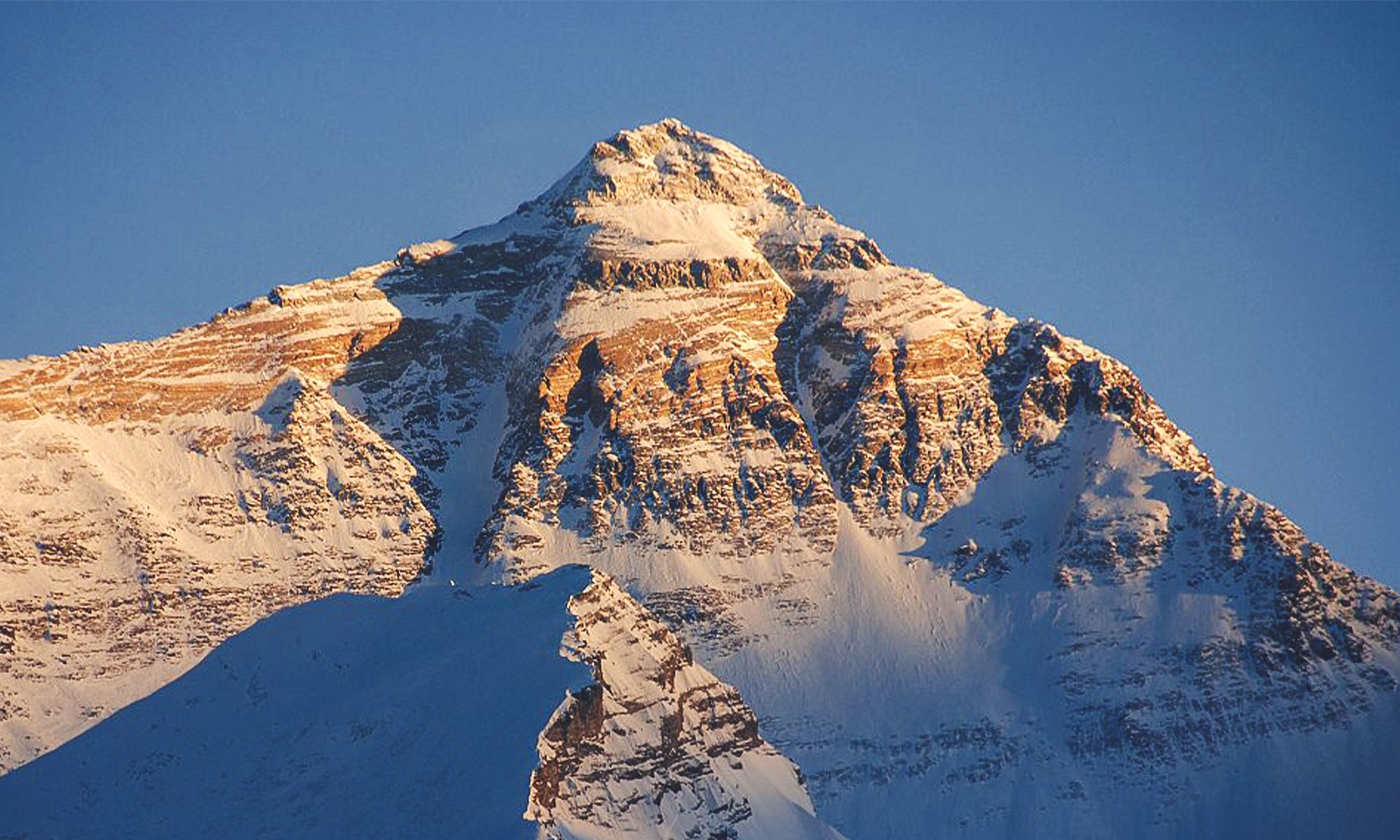
Kanchenjunga, the world's third-highest mountain at 8,586 meters (28,169 feet), straddles the border between Nepal and the Indian state of Sikkim. Its name translates to "The Five Treasures of Snow," referring to its five prominent peaks. The mountain holds deep spiritual significance for the local communities, who consider it sacred.
Expeditions to Kanchenjunga present formidable challenges due to the mountain's remote location, unpredictable weather, and technical difficulty. The standard climbing routes from both the Nepalese southwest face and the Sikkim northeast side demand advanced mountaineering skills, including navigation of massive glaciers, steep ice walls, and avalanche-prone slopes.
The mountain's isolation means longer approach treks, typically 10-14 days through some of the Himalayas' most pristine wilderness.
The climbing season runs primarily during pre-monsoon (April-May) and post-monsoon (September-October) windows, though Kanchenjunga is notorious for harsh conditions even during these periods. Expeditions typically require 6-8 weeks from base camp, with climbers establishing multiple high camps while acclimatizing to the extreme altitude.
Out of respect for local religious beliefs, mountaineers traditionally stop just short of the true summit, leaving the highest point untouched a practice initiated by the 1955 British first ascent team led by Charles Evans and continued by most expeditions since.
This spiritual dimension adds a unique ethical component to Kanchenjunga climbing that distinguishes it from other 8,000-meter peaks.
Unlike Everest or Annapurna expeditions, Kanchenjunga offers a remote and untouched expedition experience. Trek through pristine trails and high-altitude landscapes where you’ll encounter fewer climbers, giving you a more personal connection with the mountains and an authentic adventure away from the usual tourist traffic.
Summit 8000 offers an unparalleled Kanchenjunga expedition experience with expert leadership, certified mountaineers, and highly experienced Sherpa guides who ensure safety and professionalism at every step. We handle all logistics from high-altitude porters, fully equipped Kanchenjunga base camps, and food supplies to oxygen arrangements so you can focus entirely on the climb.
Every expedition is personalized to your experience, fitness, and goals, with careful acclimatization schedules, medical support, and risk management to maximize your chances of success. Beyond climbing, we prioritize eco-friendly and ethical practices, supporting local communities and preserving the pristine Himalayan environment.
With a proven track record of successful expeditions on the world’s highest peaks, Summit 8000 guarantees a safe, memorable, and authentic adventure for every climber seeking to conquer Kanchenjunga.
Upon arrival at Tribhuvan International Airport in Kathmandu, you'll be met by our representative and transferred to your hotel in the Thamel area. The rest of the day is free for you to recover from your journey and explore the vibrant streets of Nepal's capital.
In the evening, there will be a welcome dinner where you'll meet your expedition leader and fellow climbers for an initial briefing about the journey ahead. This is an opportunity to ask questions, discuss equipment, and finalize any last-minute preparations.
This day is dedicated to final expedition preparations in Kathmandu. You'll attend a comprehensive briefing at the expedition office, where the climbing leader will discuss the detailed itinerary, safety protocols, and mountain conditions. The morning includes a permit briefing at the Department of Tourism, followed by an equipment check to ensure all technical gear meets expedition standards.
You'll have time to purchase any last-minute items in Thamel's well-stocked outdoor shops. In the afternoon, there's an opportunity to visit Kathmandu's UNESCO World Heritage Sites such as Swayambhunath (Monkey Temple) or Pashupatinath Temple, offering cultural immersion before departing for the mountains.
An early morning flight takes you to Bhadrapur in eastern Nepal, offering stunning aerial views of the Himalayan range. The 45-minute flight descends into the subtropical lowlands near the Indian border. From Bhadrapur, a scenic drive of approximately 3-4 hours brings you to Ilam, a picturesque hill town famous for its tea plantations. The winding road climbs through lush green hillsides covered in terraced tea gardens.
You'll spend the night in Ilam, enjoying the mild climate and perhaps sampling the region's renowned orthodox tea. This is your last experience of comfortable accommodation before beginning the trek.
After breakfast, you'll embark on a 6-7 hour drive to Taplejung, the district headquarters and gateway to the Kanchanjunga region. The journey follows rough mountain roads with spectacular views of rural eastern Nepal. Upon reaching Taplejung, you'll meet your trekking crew and porters who will accompany you throughout the expedition.
The trek begins with a descent to Mitlung village, taking approximately 2-3 hours along a well-worn trail through traditional Limbu settlements. This gentle start allows your body to adjust to walking with a pack while experiencing the warmth and hospitality of Nepal's eastern hill communities.
The trail continues following the Tamor River valley, gradually ascending through subtropical forests filled with rhododendron, bamboo, and orchids. You'll cross several suspension bridges over cascading tributaries, each offering thrilling crossings high above the churning rivers below. The path passes through small villages where you can observe traditional farming practices and terraced rice paddies carved into the hillsides.
The 6-7 hour trek brings you to Chirwa, a small settlement where you'll camp for the night. The increasing remoteness becomes apparent as modern conveniences fade and you immerse yourself deeper into mountain life.
Today's trek of 5-6 hours continues along the Tamor River, with the trail alternating between riverside paths and climbs over ridges that separate side valleys. You'll pass through several small settlements, including Taplethok and Hellok, where teahouses offer refreshment and glimpses into local culture. The vegetation begins to transition as you gain altitude, with temperate forest species becoming more prominent.
The trail can be challenging during the monsoon season when leeches are common in the lower forests. Sukathum sits at the confluence of the Tamor and Ghunsa rivers, marking a significant junction in the valley system. The evening offers time to rest and prepare for the steeper climbing ahead.
The character of the trek changes significantly today as you leave the Tamor valley and begin ascending the Ghunsa Khola valley toward Kanchanjunga. The trail climbs steeply through dense rhododendron and bamboo forests, gaining nearly 1,000 meters over 5-6 hours of trekking. You'll cross several tributary streams on log bridges and climb through areas that can be muddy and slippery, especially during or after rain.
The forest is alive with birdlife, and if fortunate, you might spot Himalayan monkeys in the canopy. Amjilosa is a small clearing with basic teahouse facilities, offering your first real mountain camping experience. The temperature drops noticeably as you gain elevation.
Continuing up the Ghunsa valley, today's 5-6 hour trek passes through magnificent old-growth forests of pine, oak, and rhododendron. The trail undulates along the valley side, occasionally descending to cross side streams before climbing again. You'll notice the architecture and culture beginning to shift as you approach areas traditionally inhabited by people of Tibetan origin. Prayer flags and stone chortens (Buddhist shrines) become more common along the trail.
The village of Gyabla offers spectacular views up the valley toward the approaching peaks. The thinning air at this altitude may begin to affect some team members, making it important to maintain a steady, sustainable pace and stay well-hydrated.
Today's trek of 4-5 hours brings you to Ghunsa, the largest village in the upper valley and an important cultural center for the Tibetan Buddhist community. The trail continues through alpine forests with increasing views of snow-capped peaks. Ghunsa village features traditional stone houses with colorful prayer flags strung between buildings, a monastery, and several teahouses serving both trekkers and local residents.
This is a significant settlement where yak herders and traders have lived for generations, maintaining traditional Tibetan Buddhist culture. You'll spend the night here, allowing time to explore the village, visit the monastery, and continue the crucial acclimatization process before climbing higher.
This rest day is essential for proper acclimatization to the increasing altitude. Rather than remaining completely inactive, you'll take a short acclimatization hike to higher elevation, climbing 300-400 meters above the village before descending to sleep at Ghunsa. This "climb high, sleep low" strategy helps your body produce more red blood cells and adapt to lower oxygen levels. You might hike to the viewpoint above the village or explore the lateral moraine on the valley side.
The afternoon allows time to visit Ghunsa's Buddhist monastery, interact with local residents, organize gear, and rest. Expedition doctors will monitor team members for any signs of altitude sickness.
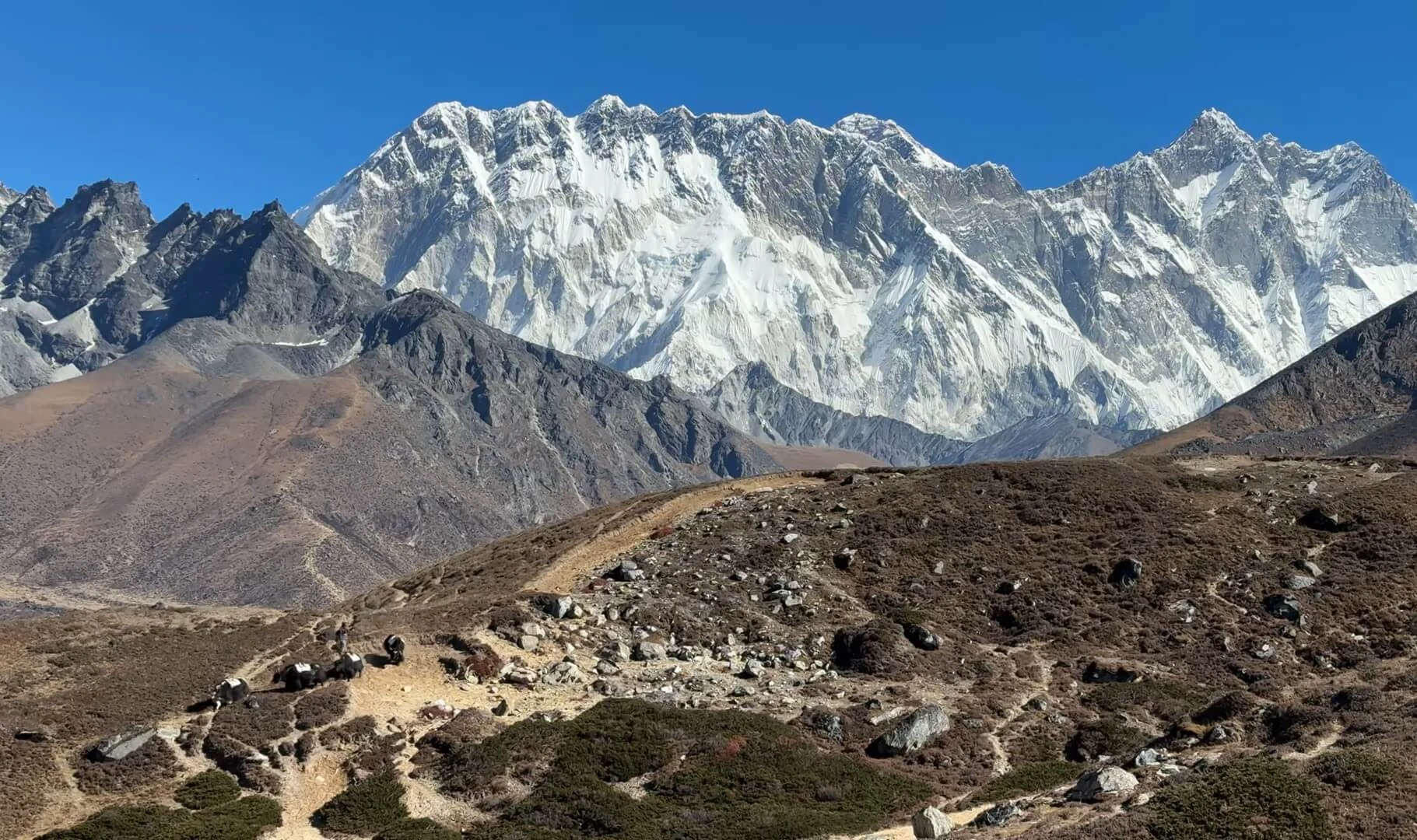
The trail climbs gradually out of Ghunsa through thinning forest, eventually emerging into the alpine zone above the tree line. The 4-5 hour trek offers increasingly dramatic mountain views as you approach the heart of the Kanchanjunga sanctuary. The landscape transforms into rocky moraines, glacial streams, and alpine meadows where yaks graze during the summer months.
You'll pass several stone shelters used by yak herders and cross glacial outwash plains where braided streams from the Kanchanjunga Glacier flow through wide gravel beds. Khambachen is a seasonal settlement with basic lodges, sitting in a spectacular amphitheater surrounded by towering peaks. The thin air and cold temperatures are a reminder that you're now in the high Himalayas.
Another crucial acclimatization day allows your body to continue adapting to the altitude. You'll take an acclimatization hike toward Kanchanjunga North Base Camp or climb the ridge behind Khambachen for spectacular panoramic views of the surrounding peaks, including Jannu (7,710m) and the north face of Kanchanjunga. The hike typically lasts 3-4 hours, climbing 300-400 meters higher before returning to Khambachen to sleep.
This is an excellent opportunity for photography as the clear mountain air and proximity to the giants of the Himalayas offer breathtaking vistas. The afternoon is spent resting, hydrating, and allowing your body to process the altitude gains.
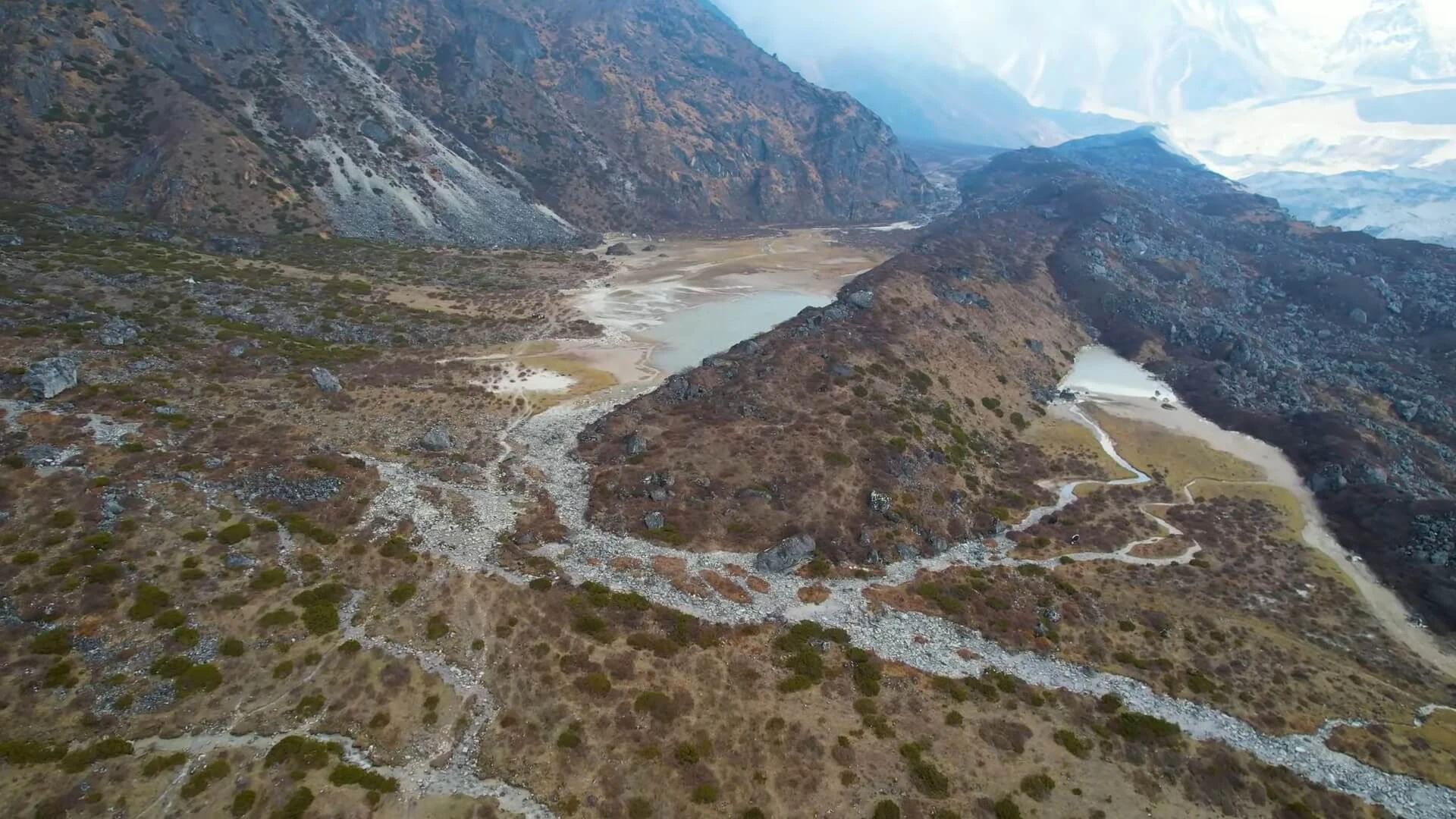
Today's trek of 4-5 hours continues up the valley toward the base of Kanchanjunga. The trail crosses the snout of the Kanchanjunga Glacier and navigates through a moonscape of glacial debris, rocky moraines, and ice-scoured bedrock. The vegetation has completely disappeared, leaving only a stark world of rock, ice, and snow. You'll cross several glacial streams on makeshift bridges and climb over lateral moraines that tower above the glacier surface.
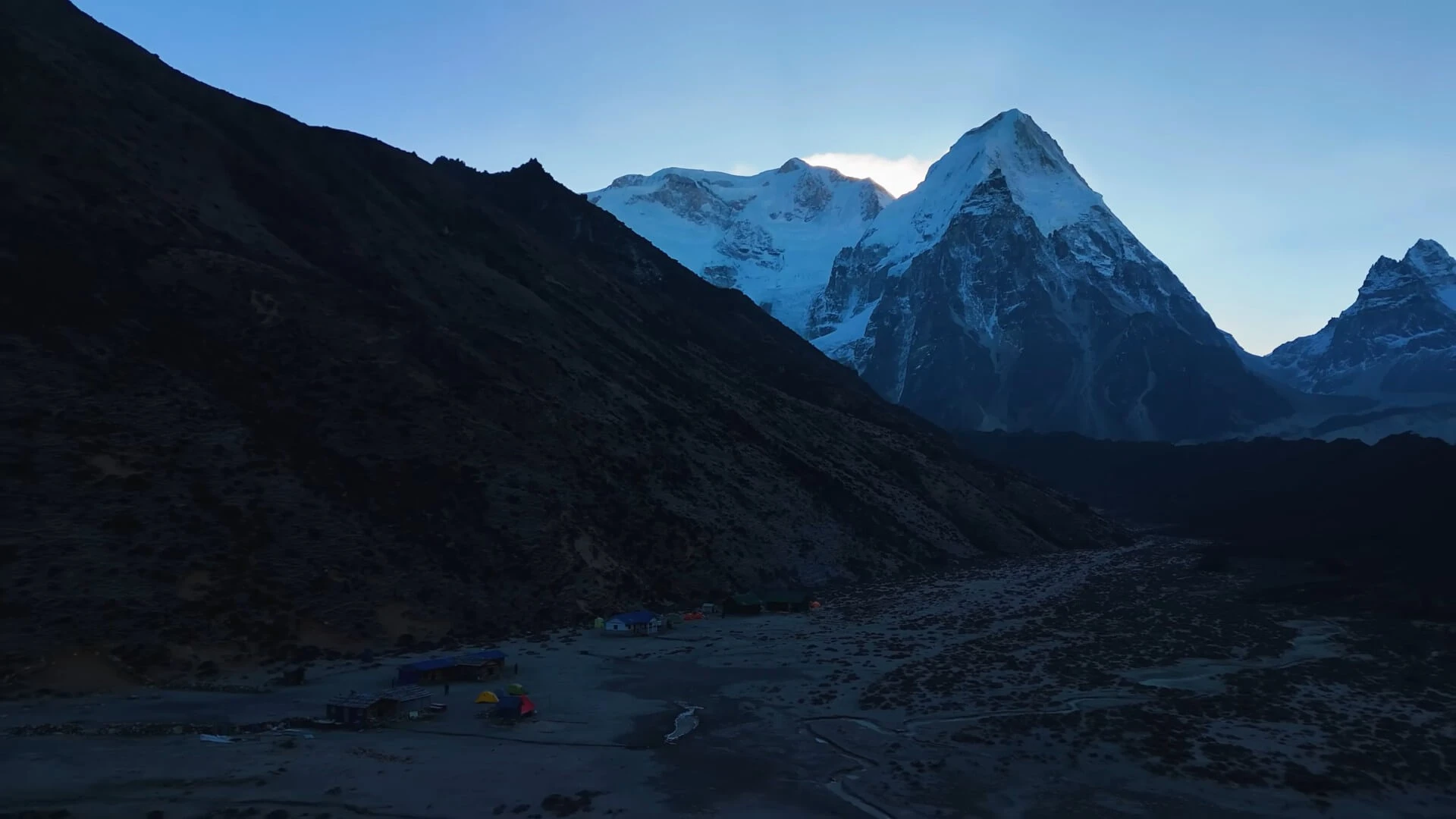
Lhonak is a basic camping area in a desolate but spectacular location, with massive ice faces and hanging glaciers visible on all sides. The temperature can drop significantly at night, and strong winds often funnel down from the glaciers above.
The final approach to base camp takes 3-4 hours across the lateral moraine alongside the Kanchanjunga Glacier. The trail is rough and requires careful footing over unstable rocks and across glacial streams.
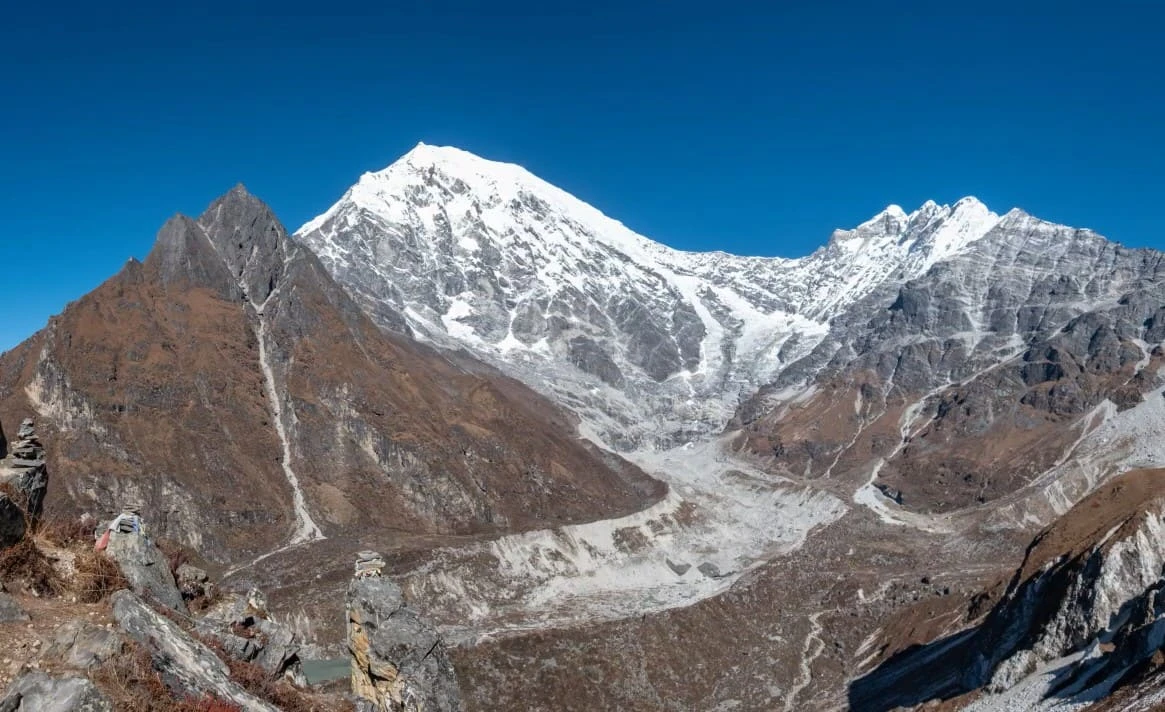
As you round the final ridge, the full south face of Kanchanjunga comes into view, a massive wall of ice, rock, and snow rising over 3,000 meters above you. Base camp is established on the rocky moraine at the edge of the glacier, with spectacular views of Kanchanjunga's southwest face and neighboring peaks including Wedge Peak and the Twins. This will be your home for the next several weeks as you prepare for the summit push.
These days are spent organizing base camp, setting up communication systems, and preparing equipment for the climbing phase. The expedition Sherpas will begin establishing the route through the icefall, fixing ropes on the most technical sections, and scouting locations for higher camps. Climbers rest, sort gear, and conduct training sessions on the use of fixed ropes, ascending and descending with jumars, and reviewing crevasse rescue techniques. The expedition doctor monitors everyone's health and oxygen saturation levels. These final preparation days are crucial for ensuring all systems are ready before committing to the mountain.
This extended period encompasses the summit push, including establishing Camps 1 (5,900m), 2 (6,800m), 3 (7,400m), and 4 (7,850m). The climbing strategy follows a rotational approach where team members make multiple ascents to progressively higher camps before descending to base camp to rest and recover. This process, typically requiring three or four rotations, continues the acclimatization process while allowing climbers to cache equipment and supplies at higher camps. The route from base camp climbs through a dangerous icefall threatened by seracs and avalanches from the hanging glaciers above. Fixed ropes are established on the steepest sections, and the Sherpa team maintains the route as the glacier shifts and crevasses open.
Camp 1 sits on a relatively flat section of the glacier, offering a temporary respite from the technical climbing. From Camp 1, the route continues up the glacier before tackling steep snow and ice slopes leading to Camp 2. This section requires front-pointing with crampons and climbing sustained pitches of 50-60 degree ice. Camp 2 to Camp 3 involves mixed climbing over rock, ice, and snow, with exposure to high winds and extreme cold. The terrain becomes increasingly technical, with knife-edge ridges, exposed traverses, and steep headwalls requiring full concentration and technical skill.
Camp 3 is positioned on a precarious platform carved from the ice, and climbers must be prepared for extremely cold conditions and strong winds that can make tent life miserable. The final push from Camp 3 to Camp 4 and then to the summit follows the southeast ridge, with sections of exposed climbing along narrow snow ridges with massive drops on either side.
Summit day typically begins around midnight, with climbers using headlamps to navigate the initial steep sections. The route crosses the upper snowfields and climbs the final summit pyramid, requiring 10-14 hours of continuous climbing from Camp 4. Following tradition, climbers stop just short of the absolute summit to honor the sacred nature of the peak.
Weather windows are critical, and the team must be prepared to wait at base camp or descend from higher camps if conditions deteriorate. The expedition leader monitors weather forecasts closely and makes strategic decisions about when to push higher or retreat to safety. Several days are built into the schedule for weather delays and to allow multiple summit attempts if necessary.
After successful summits or when the climbing window closes, all team members descend to base camp. These days are spent dismantling the high camps, recovering cached equipment, and cleaning base camp. Following Leave No Trace principles, all waste is packed out, and the campsite is returned to its natural state.
There's a mixture of emotions during this phase relief at returning safely, satisfaction with achievements, and perhaps disappointment if summit goals weren't met. The team celebrates their accomplishments together, sharing stories and photographs from the mountain.
The return journey begins with a long day descending from base camp to Khambachen. The 6-7 hour trek retraces your route down the valley, and the increasing oxygen levels at lower altitude are immediately noticeable. Energy levels rise, breathing becomes easier, and the landscape that seemed harsh on the way up now appears welcoming. The teahouses at Khambachen offer the first real comfort in weeks, with opportunities for hot showers and fresh food beyond expedition rations. Team members often feel a profound sense of relief at leaving the extreme altitude behind.
Continuing the descent, today's 4-5 hour trek drops another 500 meters to Ghunsa. The trail passes through familiar landscapes that were challenging on the approach but now seem easy as your acclimatized bodies operate efficiently at this moderate altitude. Ghunsa village offers a chance to visit the monastery again, purchase local handicrafts, and enjoy the hospitality of the teahouse owners who are always eager to hear summit stories. The relative warmth and thicker air make sleep much more restful than at higher elevations.
The long descent continues through the forested sections of the Ghunsa valley. The 5-6 hour trek drops over 1,000 meters, bringing you back into the lush vegetation zones with rhododendrons, birdsong, and the sound of rushing water. The temperature rises noticeably, and you may even feel warm during the day a stark contrast to the freezing conditions at base camp. Amjilosa's simple camping area provides basic facilities, and the surrounding forest offers a peaceful environment for reflection on the expedition experience.
Descending further into the valley system, today's trek of 5-6 hours brings you to the confluence of the Ghunsa and Tamor rivers at Sukathum. The trail is predominantly downhill, though there are still some short uphill sections as the path crosses side ridges. The vegetation becomes increasingly subtropical, with broadleaf trees replacing the conifers of higher elevations. The warmer, humid air feels thick and rich with oxygen after weeks at altitude. Sukathum's small settlement marks your return to the lower regions where cultivation and normal village life resumes.
Rather than retracing the entire route to Mitlung and Chirwa, the trek takes an alternative route directly to Taplejung. This 6-7 hour trek involves significant climbing as you gain altitude to reach the district headquarters perched on its hillside. The trail passes through terraced farmland, small villages, and patches of forest. Taplejung feels almost urban after weeks in the wilderness, with shops, restaurants, and a bustling market. You'll stay in a lodge, enjoying the luxury of a real bed, hot shower, and diverse food options for the first time since leaving Kathmandu.
An early morning departure begins the long journey back to Kathmandu. The 6-7 hour drive to Bhadrapur retraces the rough mountain roads, descending through progressively lower elevations to the subtropical plains. The afternoon flight from Bhadrapur back to Kathmandu reverses your original route, offering final views of the Himalayan range from the air. Upon arrival in Kathmandu, you'll be transferred to your hotel in Thamel. The evening is free to rest, enjoy a hot shower, and venture out to the restaurants and shops of the capital. The contrast between the expedition environment and urban life is striking.
This buffer day in Kathmandu allows for flight delays, provides a chance to recover from the journey, and offers time to explore the city properly. Many team members visit additional cultural sites, shop for souvenirs and trekking gear, or simply relax in cafes recounting expedition stories. In the evening, there's a farewell celebration dinner, typically held at a traditional Nepali restaurant with cultural performances. Certificates of achievement are presented, photographs are shared, and team members exchange contact information, having formed bonds through the shared challenges of the expedition.
On the final day, you'll be transferred to Tribhuvan International Airport according to your flight schedule. Depending on departure times, there may be opportunity for last-minute shopping or sightseeing. The expedition concludes as team members depart for their home countries, carrying memories of Kanchenjunga’s sacred summit, the challenges overcome, and the friendships forged in one of the world's most spectacular mountain environments. For many, this marks the end of one adventure and the beginning of planning the next.
Altitude Graph
The ideal time for a Kanchenjunga expedition is during the pre-monsoon season from April to May and the post-monsoon season from late September to November. During these periods, the weather is relatively stable, offering clearer skies, less snowfall, and safer climbing conditions compared to winter or monsoon months.
Kanchenjunga is one of the most challenging 8,000-meter peaks in the world. It requires advanced mountaineering experience, excellent physical fitness, and prior high-altitude climbing experience due to its technical routes and unpredictable weather conditions.
Yes, prior experience in climbing high-altitude peaks above 6,000–7,000 meters is highly recommended. Kanchenjunga’s extreme altitude, technical ice and rock sections, and prolonged exposure make it unsuitable for first-time climbers.
A full Kanchenjunga expedition usually lasts around 50 to 60 days, including trekking to base camp, acclimatization, and summit attempts. The approach itself is remote and requires several days of trekking through rugged terrain, making it a long and physically demanding expedition.
Climbers need a Kanchenjunga climbing permit issued by the Government of Nepal, along with trekking permits for the surrounding areas. These permits ensure legal access and contribute to conservation and local development in the region.
Yes, hiring experienced guides and high-altitude Sherpa support is highly recommended for safety, route navigation, and carrying equipment. Most climbers rely on professional teams for setting up camps, fixing ropes, and providing medical and logistical assistance.
Climbers need specialized high-altitude climbing gear including insulated clothing, crampons, ice axes, tents, sleeping bags rated for extreme cold, and oxygen systems. Proper gear is critical for survival and safety at extreme altitudes.
The primary risks include avalanches, crevasse falls, altitude sickness, extreme cold, and unpredictable weather changes. Careful planning, proper acclimatization, and experienced guides are essential to mitigate these risks.
A high level of cardiovascular endurance, strength, and stamina is required for Kanchenjunga. Training should include long-duration trekking with heavy loads, mountaineering exercises, and acclimatization to high-altitude conditions prior to the expedition.
Due to its extreme difficulty, Kanchenjunga expeditions are not suitable for casual hikers or first-time climbers. Only highly experienced mountaineers with proper training, previous high-altitude experience, and strong physical fitness should attempt this climb.
 Nepal
Nepal
 21
21  Sept - Nov & March - May