
Baruntse Packing List (2026): Gear Guide for 7,129m Expedition
Temba Tsheri Sherpa
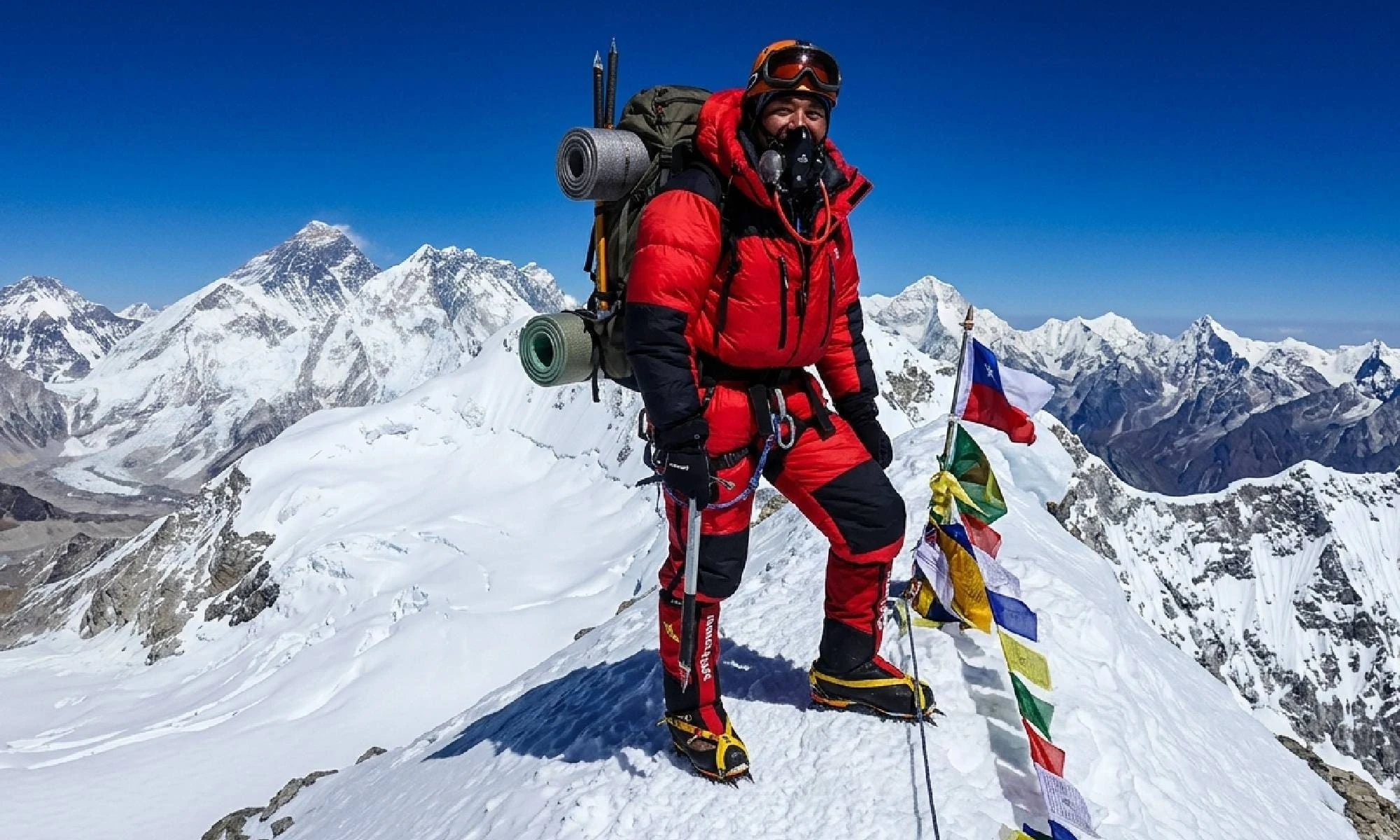
You’ve committed to Baruntse. You’ve got the fitness, you’ve found your operator, and now you’re staring at an empty duffel bag wondering exactly what goes inside it.
That’s exactly why this guide exists.
Baruntse (7,129m) is not your average trekking peak. It sits deep inside the Makalu-Barun National Park, it demands glacier travel, fixed-rope ascents, and nights above 6,000 metres. What you pack and what you leave behind will directly shape your summit chances.
This packing list is built from real expedition experience on Baruntse. We’ll walk you through every category of gear, explain why each item matters at this altitude, and tell you what your operator typically covers so you don’t double-pack.
Let’s get into it.
What Makes Baruntse Different from Other 7000m Peaks?
Before you start throwing gear into a bag, you need to understand what kind of mountain you’re dealing with.
Baruntse carries an alpine grade of AD+/4. That puts it above trekking peaks like Mera and Island Peak, but below the brutal technical demands of Ama Dablam. The standard route, the South/West Ridge via the West Col, takes you through steep snow and ice sections, glacial travel, and exposed ridge climbing above 7,000 metres.
Here’s what that means for your packing:
- You’re sleeping at an altitude for 3–4 nights above 6,000m. Your sleeping system needs to handle −20°C or colder.
- Summit day starts around 2–3 AM from Camp 2 (6,350m). You’ll be moving in pitch darkness and extreme cold.
- There are no teahouses above Base Camp. Everything you need for survival — warmth, fuel, hydration, safety lives in your pack.
- The approach trek itself takes 12–16 days through remote valleys. Your trekking gear needs to be just as dialed as your climbing gear.
The mountain rewards preparation. And preparation starts with knowing exactly what to pack.
Who Should Use This Packing List? (Skill & Experience Level)
This list is designed for climbers who already have solid high-altitude experience, ideally at least one 6,000m peak such as Mera Peak, Island Peak, or a comparable alpine route.
You should already be comfortable with:
- Moving on with crampons on steep snow and ice
- Ascending and descending fixed ropes using a jumar/ascender and figure-8 belay device
- Clipping and transferring between anchor points on exposed terrain
- Managing your own hydration and nutrition above 5,500m
If you’re ticking those boxes, this list will have everything you need. If you’re still building those skills, bookmark this page and go climb something at 6,000m first.
How to Organise Your Gear: The 3-Bag System for Baruntse
One of the most practical things you can do before you even think about individual items is set up a three-bag system. Every experienced Himalayan climber uses some version of this.
Bag 1: The Main Duffel (40–50L): This is what your porter or yak carries to Base Camp. It holds your Base Camp comfort items, spare clothing, sleeping bag, camp shoes, books, chargers, and toiletries. Most operators allow a personal baggage limit of around 40 kg in total, so keep it to 20–25 kg.
Bag 2: The Climbing Pack (65L summit pack/backpack): This carries your gear from Base Camp to Camp 1 and Camp 2. It holds your down suit, double boots, harness, crampons, ice axe, and overnight supplies for high camps. Expect to carry 10–12 kg on the mountain.
Bag 3: The Summit Day Pack (20–30L): On summit day, you strip back to the essentials: water, snacks, headlamp, emergency kit, and camera. Your goal is to keep this under 7–8 kg.
Getting this system right before you pack makes the whole expedition smoother.
Baruntse Clothing List: Base Layers to Summit Suit
Clothing is your first line of defence against the mountain. Get this wrong, and no amount of technical climbing skill will save you.
Base Layer
Your base layer lives directly against your skin. Go with merino wool or a synthetic moisture-wicking fabric never cotton above Base Camp. Cotton holds sweat and loses insulation value when wet. That’s dangerous at altitude.
- Lightweight merino wool long-sleeve top × 2
- Merino wool long underwear / thermal leggings × 2
- Merino wool or synthetic mid-weight base layer (for colder nights)
Mid Layer
This is your primary insulation for trekking days and Base Camp evenings.
- Fleece jacket (200–300 weight) wear it constantly at Base Camp
- Insulated down jacket (600–800 fill power) your evening and rest-day layer
- Softshell trousers for trekking packable, windproof, durable
Shell Layer
Your outer shell needs to block wind and shed precipitation without trapping moisture.
- Gore-Tex hardshell jacket waterproof, windproof, fully seam-sealed
- Gore-Tex hardshell trousers look for full-length side zips so you can pull them over boots
Summit Layer (The Big One)
This is the most important item in your entire kit. At 7,129m, with wind chill potentially dropping temperatures to −40°C or below, your down suit or expedition one-piece is what stands between you and serious cold injury.
- Expedition down suit (700+ fill power, rated to at least −40°C) one-piece suits are warmer and remove the gap between jacket and trousers
- Examples: Rab Neutrino Endurance, Mountain Equipment Annapurna, Feathered Friends Aerie
Head, Hands & Feet
Frostbite happens fastest at your extremities. Don’t cheap out here.
- A balaclava covers the face, head, and neck.
- Buff/neck gaiter × 2 one for trekking, one for summit layers
- Beanie (lightweight merino for sleeping, heavier for cold days)
- Lightweight liner gloves for rope work when you need dexterity
- Mid-layer insulated gloves for trekking and Base Camp.
- Summit mitts (expedition-grade, down-filled) are non-negotiable for summit day
- Gaiters keep snow out of your boots on the glacier.
Technical Climbing Gear Checklist for Baruntse (7,129m)
This is the section that separates a Baruntse packing list from a regular trekking packing list. Every item here serves a specific technical function. Don’t skip or substitute.
Movement on the Mountain
- Crampons (12-point, compatible with your double boots C2/C3 rated) Petzl Dart or similar
- Ice axe (technical, 55–65cm depending on height) for self-arrest and support on steep sections
- Ice tools × 2 (for steeper sections of the West Col approach)
- Full-body climbing harness properly fitted, with gear loops
Rope Systems & Ascending
- Jumar / ascender (full-size, e.g., Petzl Ascension) this is what gets you up fixed lines
- Figure-8 belay/abseil device NOTE: tube-style ATCs do not work properly on fixed lines; use a figure-8
- Locking carabiners × 4–6 (HMS + straight gate)
- Non-locking carabiners × 4
- Tape slings × 3–4 (60cm and 120cm)
- Prusik loops × 2 (for self-rescue and backup on rappels)
- Chest harness or Petzl Croll (optional but useful for long fixed-line sections)
Protection
- Climbing helmet mandatory above Base Camp; falling ice is a real hazard on Baruntse
Footwear for Baruntse: Trekking Boots vs. Double Mountaineering Boots
You actually need two pairs of footwear for a Baruntse expedition. Most first-timers forget this.
Trekking Boots (Base Camp Approach)
For the 12–16-day approach trek through the Hunku Valley, you want a quality waterproof trekking boot with solid ankle support. You don’t need a crampon-compatible boot for this section just comfort and durability.
- Scarpa Zodiac Plus GTX, La Sportiva Trango Tech GTX, or similar
- Break these in thoroughly before the expedition at least 80–100km of hiking
Double Mountaineering Boots (For the Climb)
Above Base Camp, you switch to double boots an inner thermal boot inside a rigid outer shell. These are essential for temperatures below −20°C on the mountain.
Highly recommended models:
- La Sportiva Olympus Mons Cube (the gold standard, rated to −50°C)
- Scarpa Phantom 8000
- Millet Everest Summit GTX
- Kailas Everest 8000M
A few critical tips on double boots:
- Always try them with your summit socks on when sizing they run differently to regular boots
- Walk in them for at least a full day before the expedition they’re significantly stiffer and heavier than trekking boots
- Make sure your crampons are fitted to your specific boot model before you leave Kathmandu
Camp Shoes
Bring a pair of lightweight down booties or camp crocs for Base Camp comfort. Your feet will thank you after a long day.
Sleeping System: Sleeping Bags, Pads, and High-Altitude Tents
You spend roughly a third of an expedition horizontal. Your sleeping system is not a place to cut corners or weight.
Sleeping Bag
You need a four-season expedition sleeping bag rated to at least −20°C comfort (not lower-limit — comfort). For extra cold nights at Camp 2 (6,350m), a −30°C bag gives you real peace of mind.
- Look for 700–800 fill power down, hydrophobic treatment
- Recommended: Rab Neutrino 600, Western Mountaineering Puma, PHD Minimus 400
Sleeping Pad
Don’t rely solely on the tent floor for insulation. A closed-cell foam pad (Therm-a-Rest Z-Lite) under an inflatable (Therm-a-Rest NeoAir XTherm) gives you excellent insulation from the cold ground. The inflatable alone can fail in extreme cold.
Tents
Your expedition operator provides tents at all camps. This is standard. You don’t need to carry your own tent. However, some climbers bring an ultra-light bivy sack as emergency backup.
Navigation, Safety & Emergency Gear for Baruntse
Remote, high-altitude terrain demands a proper emergency kit. No shortcuts here.
Lighting
- Headlamp × 2 (one primary, one backup) summit day starts in darkness; bring extra lithium batteries (cold drains standard batteries fast)
- Hand warmers activate one and stick it in your headlamp case the night before summit day
Navigation & Communication
- Altimeter watch (Garmin, Suunto, or Coros) tracks altitude gain and monitor acclimatization
- Walkie-talkie / two-way radio, your operator usually provides these; confirm before you pack one
- Personal locator beacon (PLB) or satellite communicator (Garmin inReach) is strongly recommended for solo peace of mind
- Whistle lightweight emergency signalling
Medical & Safety
- First aid kit (personal), your operator’s team carries a group kit, but carry your own for personal medications.
- Diamox (acetazolamide): consult your doctor before the expedition; many climbers use this to manage AMS.
- Personal medications list everything and inform your guide.
- High-altitude sunglasses (CE-rated Category 4, glacier glasses with side shields) UV at 7,000m will blind you without proper eye protection
- Snow goggles for high-wind summit days
- Sunscreen SPF 50+ and lip balm glacier reflection burns severely.
Your operator carries a Gamow bag (portable hyperbaric chamber) and emergency oxygen for serious altitude emergencies. Know where it is at Base Camp.
Nutrition, Hydration & High-Altitude Food Packing Tips
Most packing guides completely ignore this section. Don’t make that mistake. Nutrition directly impacts your summit performance.
Hydration
Drink 4–6 litres of water every day on a Baruntse expedition. Dehydration accelerates altitude sickness and crushes your energy levels.
- Hydration tablets / electrolyte sachets × 30–40 (Nuun, Precision Hydration, or similar)
- Insulated water bottle (Nalgene wide-mouth, 1L) keeps water from freezing
- Thermos flask (500ml) fill with warm water for summit day; vital in extreme cold
- Water filter or purification tablets for water from glacial streams on the approach
Snacks & Summit Fuel
Your appetite drops dramatically above 5,500m. You need calorie-dense, easy-to-eat food that doesn’t require preparation.
Pack enough of the following for your climbing days:
- Energy gels (GU, Maurten, SiS) × 20–30
- Nut butter sachets × 10–15
- Chocolate bars and energy bars × 30+
- Dried fruit and nuts mix
- Instant soup sachets (warm calories at camp)
- Electrolyte drink powder
- Hard candy / glucose sweets for summit day
Your operator provides all main meals at Base Camp and high camps. These personal snacks are purely for between-meal fuel and summit-day emergencies.
Electronics & Communication Gear for Remote Himalayan Expeditions
You’re heading into one of the most remote valleys in Nepal. Plan your electronics accordingly.
Power & Charging
- Solar panel charger (10–20W, foldable) your primary charging method at Base Camp
- High-capacity power bank (20,000–26,000mAh) pre-charged in Kathmandu
- Universal travel adapter for hotel charging in Kathmandu
- Extra batteries for headlamp, GPS watch, camera (cold kills batteries fast; keep spares warm in inner pockets)
Photography
- Camera mirrorless or DSLR with a 24-70mm range covers trekking; bring a wide angle for summit panoramas
- GoPro or action camera tough, lightweight, and perfect for high-altitude footage
- Extra memory cards × 4–6
- Soft pouch or case protect your camera from extreme cold and moisture
Communication
- Satellite phone or Garmin inReach your operator carries a sat phone; consider your own for family communication
- SIM card with data buy a Ncell or NTC SIM in Kathmandu for connectivity on the approach trek through villages
What Gear Is Provided by Your Expedition Operator?
This is the question that saves you from over-packing and over-spending. Your expedition operator typically covers all of the following:
At Base Camp:
- Base camp tent (often 1 tent per climber)
- Dining tent with tables and chairs
- Kitchen tent and toilet tent
- Satellite phone for emergencies
- Walkie-talkies for Base Camp to mountain communication
- Group first aid kit and Gamow bag
- Emergency oxygen with regulator
- Cook, kitchen crew, and expedition manager
On the Mountain:
- Fixed ropes on technical sections (your operator’s Sherpa team fixes these)
- High-altitude tents at Camp 1 and Camp 2 (shared, usually 2 climbers per tent)
- EPI gas stoves and cooking fuel at high camps
- Group climbing ropes, ice bar anchors, and snow protection
What you always bring yourself:
- All personal clothing and layering system
- Your own crampons, ice axe, harness, ascender, and carabiners
- Personal sleeping bag and sleeping pad
- Personal snacks, medications, and toiletries
- Your trekking and double mountaineering boots
Always confirm the exact inclusions with your specific operator before you pack every company varies slightly.
Renting vs. Buying Climbing Gear in Kathmandu
If you’re new to 7,000m expeditions, you might not own all the technical gear yet. Good news: Kathmandu’s Thamel district has an excellent rental and retail market for expedition climbing equipment.
What’s Worth Renting in Kathmandu
- Double mountaineering boots (if you’re not yet sure about sizing or brand preference)
- Down suits (rental quality varies inspect carefully)
- Crampons and ice axes (good quality rentals available)
- Sleeping bags
What’s Worth Buying in Kathmandu
- Buffs, gloves, liner socks, and smaller accessories are very affordable
- Hydration tablets and snacks are widely available
- Local brand gear can be good value for Base Camp layers
What You Should Buy at Home
- Your primary down suit don’t compromise on this; rental suits can have degraded insulation
- Your headlamp, harness, ascender, and belay device these are safety-critical and should fit perfectly
- Expedition-grade sleeping bag insulation quality matters enormously
Budget USD 200–500 for Kathmandu gear top-ups even if you arrive well equipped.
Weight & Baggage Limits: How to Pack Smart for Baruntse
Weight management is a real discipline on a Baruntse expedition. Here’s how to think about it:
Total personal baggage: Most operators cap this at 40 kg across all your bags. Stay under this.
What your porter/yak carries to Base Camp: Your main duffel with everything you need at Base Camp. Target 20–22 kg.
What you carry on the trek: A daypack with your daily essentials, water, snacks, layers, camera. Target 5–8 kg.
What you carry to high camps: Your climbing pack with sleeping bag, down suit, boots, harness, and climbing hardware. Target 10–12 kg.
Summit day pack: Water, snacks, headlamp, spare gloves, emergency kit, camera. Target 6–8 kg.
Tips for cutting weight without cutting safety:
- Leave hardcover books at home; download to your e-reader or phone.
- Decant toiletries into small containers
- One luxury item is fine (cards, Kindle, journal) don’t bring three.
- Share group items like sunscreen and lip balm with your climbing partners.
Gear Checklist by Camp: Base Camp, Camp 1, Camp 2, Summit
This is the breakdown no other packing guide gives you. Here’s exactly what you need at each stage.
Base Camp (5,300m – 5,380m)
- Full sleeping system (bag + pad)
- Camp shoes / down booties
- All Base Camp clothing (fleece, down jacket, thermal layers)
- Toiletries and personal medications
- Electronics and charging gear
- Books, entertainment, journal
- All climbing gear (stored here until needed)
Camp 1 (West Col, ~6,126m)
- Double boots + crampons + ice axe
- Climbing harness, ascender, carabiners, slings
- Down suit (carry up; you may not need it all night, but have it accessible)
- Sleeping bag + sleeping pad
- Headlamp + spare batteries
- 1L insulated water bottle + snacks for the climb
- Summit gloves and a balaclava
Camp 2 (6,350m, base of Baruntse Ridge)
- Everything from Camp 1
- Summit pack ready to go (pre-packed before you sleep)
- Thermos of warm water for summit morning
- High-altitude snacks and gels
Summit Day Push (7,129m)
- Down suit fully zipped.
- Summit mitts over liner gloves
- Balaclava + goggles + glacier glasses
- Headlamp (starts in darkness at 2–3 AM)
- 1L thermos + water bottle
- Energy gels, nut butter, hard sweets
- Personal locator beacon / inReach
- Camera (keep inside the down suit to prevent battery freeze)
- Spare hand warmers × 4
Final Pre-Departure Gear Check: What Expert Climbers Don’t Forget
You’ve built your full packing list. Now run through this final checklist 48 hours before you fly.
Documents (carry in a waterproof pouch):
- Passport + 2 extra passport photos
- Photocopies of passport and visa pages
- Proof of travel insurance (mountaineering-specific, covering rescue above 7,000m)
- Emergency contact card
Gear tests before you leave home:
- Turn on every electronic device and verify it works
- Test your headlamp with fresh batteries
- Test your ascender and belay device on a rope
- Wear your double boots for at least 2 hours to confirm fit with summit socks
Things experienced climbers always forget:
- Spare glasses / contact lens solution if you wear them (goggles won’t fit over most glasses)
- A physical note of your blood type and emergency contacts
- Small padlock for your duffel bag (Kathmandu hotel storage)
- Ziplock bags in multiple sizes invaluable for organising small items and waterproofing documents
- Duct tape × 1 small roll fixes everything from cracked boot soles to torn jacket seams
Packing for Baruntse is genuinely exciting once you break it down into categories. You’re not just throwing gear into a bag, you’re assembling a life-support system for one of the most extraordinary environments on Earth.
The golden rule: quality over quantity. One excellent down suit beats three mediocre layers. The right double boot beats saving weight with a waterproof trekking shoe. And a proper expedition sleeping bag beats shivering through the night at 6,350m.
If you’re still unsure about specific items, talk to your expedition operator. A reputable company will review your gear list before you fly and flag anything critical before it’s too late.
Now go pack your bag. Baruntse is waiting.
Have questions about specific gear for Baruntse? Drop them in the comments below we answer every question from our experience on the mountain.
Related reads: