
Baruntse Peak Climbing vs Mera Peak Climbing — Which One Should You Choose?
Temba Tsheri Sherpa
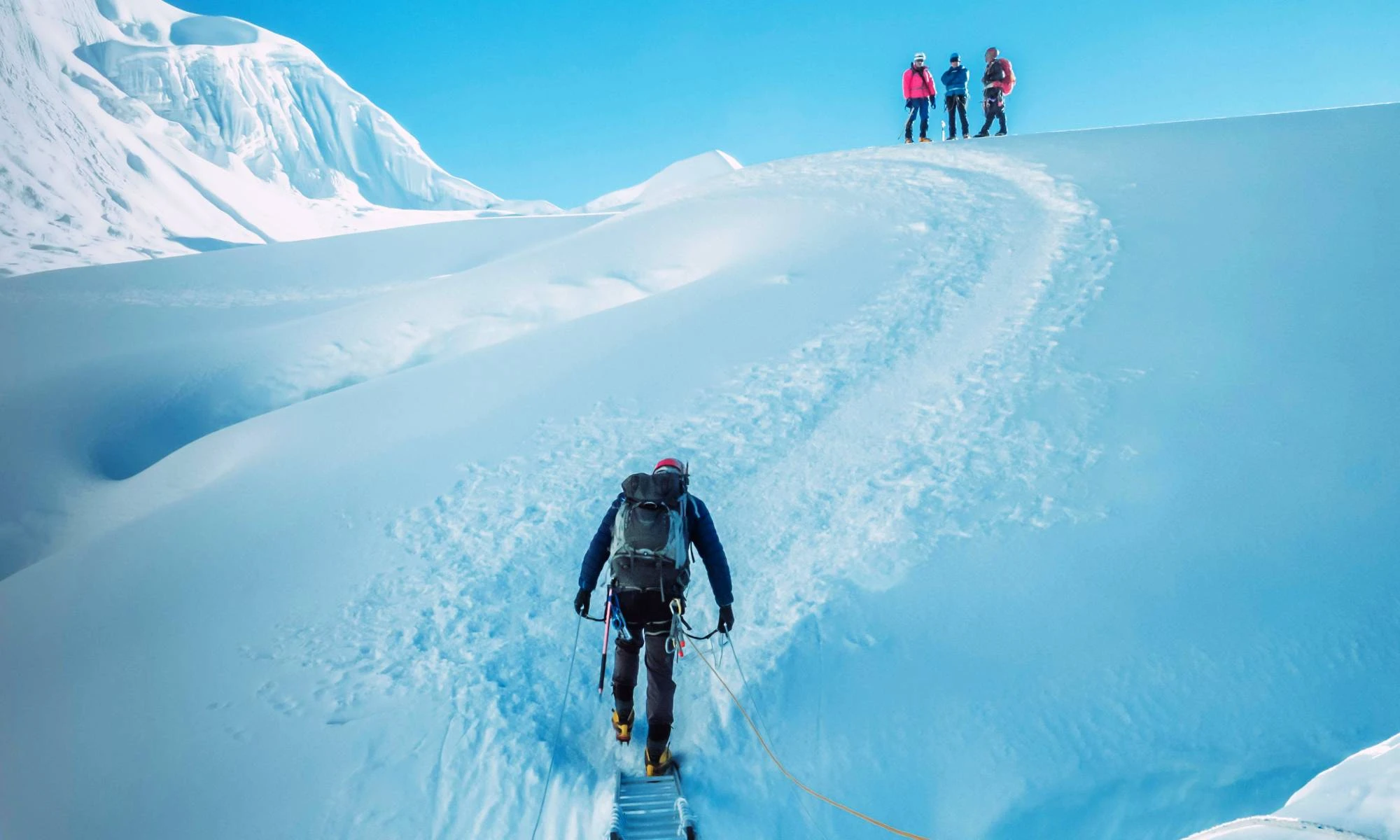
So, you’ve been dreaming about standing on a Himalayan summit. You’ve done your research, shortlisted your peaks, and now you’re stuck between two incredible options: Mera Peak and Baruntse. Trust me, this is a great problem to have. Both peaks sit in the heart of Nepal’s most dramatic mountain landscapes, and both will give you memories that last a lifetime.
But here’s the truth: these two peaks are not the same kind of challenge. One is a gateway into high-altitude climbing, and the other is a serious mountaineering objective that demands respect, experience, and preparation. In this guide, I’m going to walk you through everything you need to know to make the right choice for you.
Let’s get into it.
Overview of Mera Peak and Baruntse
Before we compare, let me introduce you to both of these magnificent peaks properly.
Mera Peak stands at 6,476 metres and is located in the Hinku Valley of the Khumbu region in eastern Nepal. It holds the title of Nepal's highest trekking peak, and that alone tells you a lot. It’s classified as a trekking peak by the Nepal Mountaineering Association (NMA), meaning it’s designed to be accessible to motivated trekkers and first-time high-altitude climbers.
Every year, hundreds of adventurers from around the world make their way up Mera, and many of them have never climbed a glaciated peak before. That’s how welcoming this mountain is.
Baruntse, on the other hand, stands tall at 7,129 metres and sits in the remote Makalu-Barun region, straddling the border between the Khumbu and Makalu zones. This is a full expedition peak managed by Nepal’s Ministry of Tourism, not the NMA. Baruntse is not here to welcome beginners. It’s a serious, technical mountain with mixed terrain, long ridges, and genuine alpine challenges.
If Mera is where your Himalayan journey begins, Baruntse is where it levels up.
Think of it this way: Mera is the mountain that opens the door to high-altitude climbing. Baruntse is the mountain that tests whether you’re ready to walk through it.
Difficulty and Technical Demands of Mera and Baruntse
This is where the two peaks truly separate themselves, and I want you to be honest with yourself when you read this section.
Mera Peak is largely a non-technical climb. The route follows glacier slopes and snow fields, and while the altitude is very real and demands your full respect, the actual climbing technique required is minimal. You’ll be using crampons and an ice axe, but there are no vertical faces, no complicated rope work, and no exposed ridges that will make your heart stop. If you’re physically fit, well-acclimatised, and motivated, Mera is absolutely within your reach.
Baruntse is a completely different story. This mountain involves mixed terrain rock, snow, and ice that demands real mountaineering skill. You’ll be navigating crevasse fields, climbing fixed ropes on steep sections, crossing exposed ridges, and dealing with altitude that pushes well beyond 7,000 metres. The mountain is graded between AD and D in alpine terms, which means it sits in the “fairly difficult to difficult” category. The technical demands are real, and they are unforgiving if you’re not prepared.
Here’s my honest guidance: If you’ve never used crampons before, choose Mera. If you’ve summited multiple 6,000m peaks and you’re comfortable on glaciated terrain, Baruntse is calling your name.
Required Experience and Skills for Mera Peak and Baruntse Peak Climbing
Let me be very direct with you here, because getting this wrong in the mountains can have serious consequences.
For Mera Peak, you don’t need prior mountaineering experience. What you do need is a solid trekking background, a good cardiovascular fitness base, and the mental determination to push through altitude discomfort. Your guide will teach you how to use crampons and an ice axe on the mountain itself.
Many people who summit Mera have never done anything like it before and they succeed because they listened to their guides, paced themselves well, and respected the altitude.
For Baruntse, the requirements are in a completely different league. You should have:
- At least one or two prior summits above 6,000 metres (Mera Peak itself is ideal preparation)
- Solid experience with crampons, ice axe, and rope travel on glaciated terrain
- Knowledge of belay techniques, rappelling, and moving efficiently on fixed lines
- The physical conditioning to sustain effort at extreme altitude over multiple days
A guide is not just recommended for Baruntse expedition, it is absolutely essential. This is not a peak you improvise on. A qualified, experienced mountain guide can be the difference between a successful summit and a dangerous situation.
My advice: If you haven’t climbed Mera yet, climb Mera first. It is genuinely one of the best preparations you can do for Baruntse.
Climbing Season and Weather for Mera and Baruntse Expedition
Timing your climb correctly is one of the most important decisions you’ll make, and both peaks share similar seasonal windows with some key differences.
The two best seasons for both Mera Peak and Baruntse are:
- Spring (April to May) warmer temperatures, longer days, and generally stable weather windows before the monsoon arrives
- Autumn (October to November) crisp, clear skies after the monsoon clears, excellent visibility, and firm snow conditions
Spring is generally considered the prime season for Baruntse because the snow conditions on the technical sections are more stable and the weather windows tend to be more predictable. For Mera, both seasons are excellent, and many climbers prefer autumn because the post-monsoon clarity gives you those jaw-dropping panoramic views from the summit.
Winter climbing (December to February) is possible on Mera for experienced cold-weather trekkers but is brutally cold and not recommended for first-timers. Baruntse in winter is strictly for highly experienced expeditions. The monsoon season (June to September) makes both peaks dangerous and is best avoided entirely.
One thing to keep in mind at these altitudes, weather can change rapidly regardless of the season. Always build flexibility into your itinerary and never rush your summit push because of schedule pressure.
Recommended Read:
When is the Best Time for Baruntse Expedition? (Season Guide)
Permit Costs and Expedition Expenses for Mera and Baruntse
Let’s talk money because this is often a deciding factor, and I want you to have a realistic picture.
Mera Peak Permit
The climbing permit for Mera Peak is issued by the Nepal Mountaineering Association (NMA) and costs approximately USD $125 per person for the autumn season and slightly more in spring. It’s one of the most affordable permits for a high-altitude peak in Nepal.
When you factor in your full package agency fees, guide, porters, accommodation (tea houses on approach, tents at high camp), food, and flights to Lukla, you’re looking at a total budget of roughly USD $1,500 to $3,500, depending on the operator and level of service.
Baruntse Permit
Baruntse is a Ministry of Tourism peak, and the permit fee sits at approximately USD $500 per person for a team of up to 7 climbers, with a royalty structure for larger teams. This is before you add expedition logistics.
A full Baruntse expedition, including agency, experienced high-altitude guides, Sherpa support, base camp setup, fixed ropes, oxygen (if needed), food, and logistics, will typically run between USD $5,000 to $12,000 or more per person, depending on the agency and team size.
Don’t forget the hidden costs on both peaks:
- Comprehensive travel and climbing insurance (non-negotiable make sure it covers helicopter evacuation)
- Gear rental or purchase (especially for Baruntse you’ll need a full technical kit)
- International flights to Kathmandu
- Kathmandu accommodation and sightseeing days
Bottom line: Mera is genuinely budget-friendly for a high-altitude Himalayan experience. Baruntse is an investment, but for the right climber, it’s worth every rupee.
Recommended Read:
Acclimatisation and Trek Duration
One of the most common mistakes climbers make in the Himalayas is rushing. The mountains reward patience, and both these peaks require proper acclimatisation strategies.
Mera Peak approximately 18 to 21 days total
The classic approach to Mera Peak starts with a flight from Kathmandu to Lukla, followed by a trek through the beautiful and remote Hinku Valley. This route naturally builds your altitude in a sensible, gradual way. A typical itinerary includes rest and acclimatization days at key elevations, a high camp night at around 5,800 metres, and then a summit push to 6,476 metres. The pace is steady, the trail is stunning, and by the time you’re standing at high camp, your body has had time to adjust.
Baruntse approximately 25 to 32 days total
Baruntse demands a longer, more structured acclimatisation process. The approach typically goes through the Khumbu region or via Lukla toward the Hinku and Hongu valleys. Many expeditions strategically climb Mera Peak first as an acclimatization peak before pushing toward Baruntse, and this is genuinely one of the smartest approaches you can take. The Baruntse itinerary includes multiple high camps, rotation climbs to build altitude tolerance, and rest days that are not optional; they are essential.
If you’re considering the Mera + Baruntse combination expedition, plan for around 30 to 35 days. It’s a big commitment, but it’s arguably the most logical and rewarding way to approach Baruntse for those who don’t have prior 7,000m experience.
Summit Views and Highlights
Now for the part that makes all the hard work worth it, what you’ll actually see and experience.
From the summit of Mera Peak, you will be treated to one of the most celebrated panoramic views in the entire Himalayan range.
On a clear day, you can see five of the world’s six highest mountains: Everest, Lhotse, Makalu, Cho Oyu, and Kanchenjunga, all spread across the horizon like a living painting. Many experienced mountaineers and photographers consider Mera’s summit view to be among the finest in Nepal, despite it not being the most technically demanding peak. The Hinku Valley approach itself is spectacular remote, green, and largely untouched by mass tourism.
From Baruntse’s summit, you’re looking at the world from a very different elevation. The views deep into the Barun Glacier, the raw north face of Makalu, and the full Everest massif from above 7,000 metres create a perspective that very few people ever get to experience.
The remoteness of the Makalu-Barun National Park adds a wild, untamed quality to the entire expedition. You’ll encounter hanging glaciers, dramatic icefalls, and an environment that feels genuinely untouched. The journey to Baruntse is as impressive as the summit itself.
Both peaks offer extraordinary photographic opportunities, but Baruntse, given its elevation and remoteness, offers views that are rarer and more exclusive.
Who Is Mera Peak Best For?
Mera Peak is the right choice for you if:
You’re a first-time high-altitude climber. If you’ve been trekking for years and you’re ready to take your first step into mountaineering, Mera is the perfect entry point. It gives you the full high-altitude experience without requiring you to be a trained alpinist.
You’re on a budget or have limited time. With a 3-week itinerary and relatively affordable costs, Mera fits into realistic schedules and travel budgets far better than a full expedition.
You want a summit that rewards you without overwhelming you. The joy of standing on Mera’s summit at 6,476 metres looking out at Everest and four other 8,000m giants is genuinely profound. You don’t need to be a hardcore climber to feel that.
You’re using it as a stepping stone. Many people climb Mera specifically as preparation for bigger objectives Baruntse, Island Peak, or eventually 8,000m peaks. If that’s your path, Mera is the perfect first chapter.
You’re part of a group with mixed experience levels. Mera is one of the few high-altitude peaks where a group with varying fitness levels can realistically attempt the summit together with proper guidance.
Who Is Baruntse Best For?
Baruntse is the right choice for you if:
You’ve already climbed at altitude and you’re hungry for more. If you’ve ticked off Mera, Island Peak, or similar 6,000m peaks and you felt strong, technically capable, and still wanting a bigger challenge Baruntse is your next mountain.
You want a genuine mountaineering experience. Not a trekking peak with a glacier walk, but a real alpine objective with technical sections, high camps, and the kind of challenge that makes you grow as a climber.
You’re preparing for 8,000m peaks. Baruntse is an excellent training ground for those with ambitions toward the eight-thousanders. The technical demands, altitude, and multi-day expedition structure are excellent preparation.
You want solitude and remoteness. Baruntse sees far fewer climbers than Everest Base Camp or even Mera. If you want the raw, unfiltered Himalayan experience without crowds, this is your mountain.
You have 5 weeks and a serious budget to invest. Baruntse rewards those who come fully prepared in time, finances, fitness, and mindset. If you can commit to that, the mountain will give you everything back and more.
Which Should You Choose?
Here’s the honest, no-nonsense answer I’d give you if we were sitting down over a cup of tea in Kathmandu
Choose Mera Peak if you are new to high-altitude climbing, have limited technical mountaineering experience, are working with a tighter budget or timeline, or want an incredible first Himalayan summit that will inspire you to come back for more.
Choose Baruntse if you have prior 6,000m+ summit experience, are comfortable on technical terrain with ropes and crampons, have the time and budget for a full expedition, and you’re genuinely ready to push into serious mountaineering territory.
Choose both the Mera + Baruntse combo if you want the ultimate Himalayan experience in a single trip. Climb Mera first for acclimatization, then push on to Baruntse. It’s a big undertaking, but for the right climber, it is one of the finest Himalayan expeditions you can do.
|
Mera Peak
|
Baruntse
|
|
|
Elevation
|
6,476m | 7,129m |
|
Difficulty
|
Non-technical | Technical (AD–D) |
|
Experience Needed
|
Beginner-friendly | 6,000m+ required |
|
Duration
|
18–21 days | 25–32 days |
|
Permit Cost
|
~$125 | ~$500 |
|
Total Budget
|
$1,500–$3,500 | $5,000–$12,000+ |
|
Best Season
|
Spring & Autumn | Spring (preferred) |
|
Crowds
|
Moderate | Very low |
|
Best For
|
First-timers, trekkers | Experienced mountaineers |
Whatever you choose, go in well-prepared, respect the mountain, listen to your guide, and never let summit fever push you beyond your limits. The mountains will always be there the goal is to make sure you are too.
Now lace up your boots. The Himalayas are waiting for you.
Planning your Mera Peak or Baruntse expedition? Make sure you work with a certified, experienced trekking and mountaineering agency based in Nepal, carry comprehensive climbing insurance, and always prioritize acclimatization over summit ambition. Safe climbing!
Resources Reads